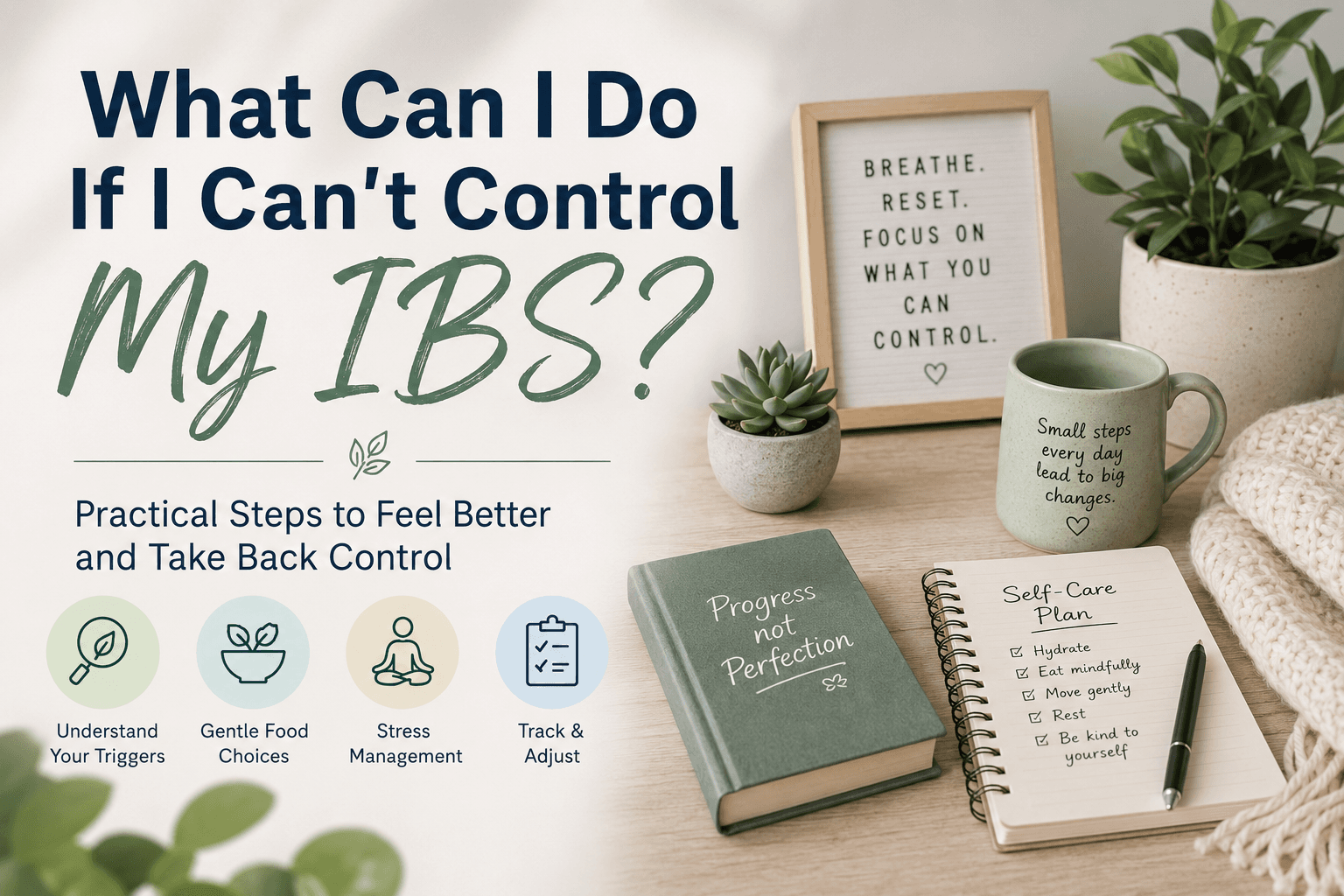
What Can I Do If I Can't Control My IBS?
Feeling like nothing works for your IBS? Here's what to do when standard advice isn't enough from diet resets to gut-brain tools and when to push for specialist care.
Written by Digestimove Team7 min read
When IBS Feels Out of Control
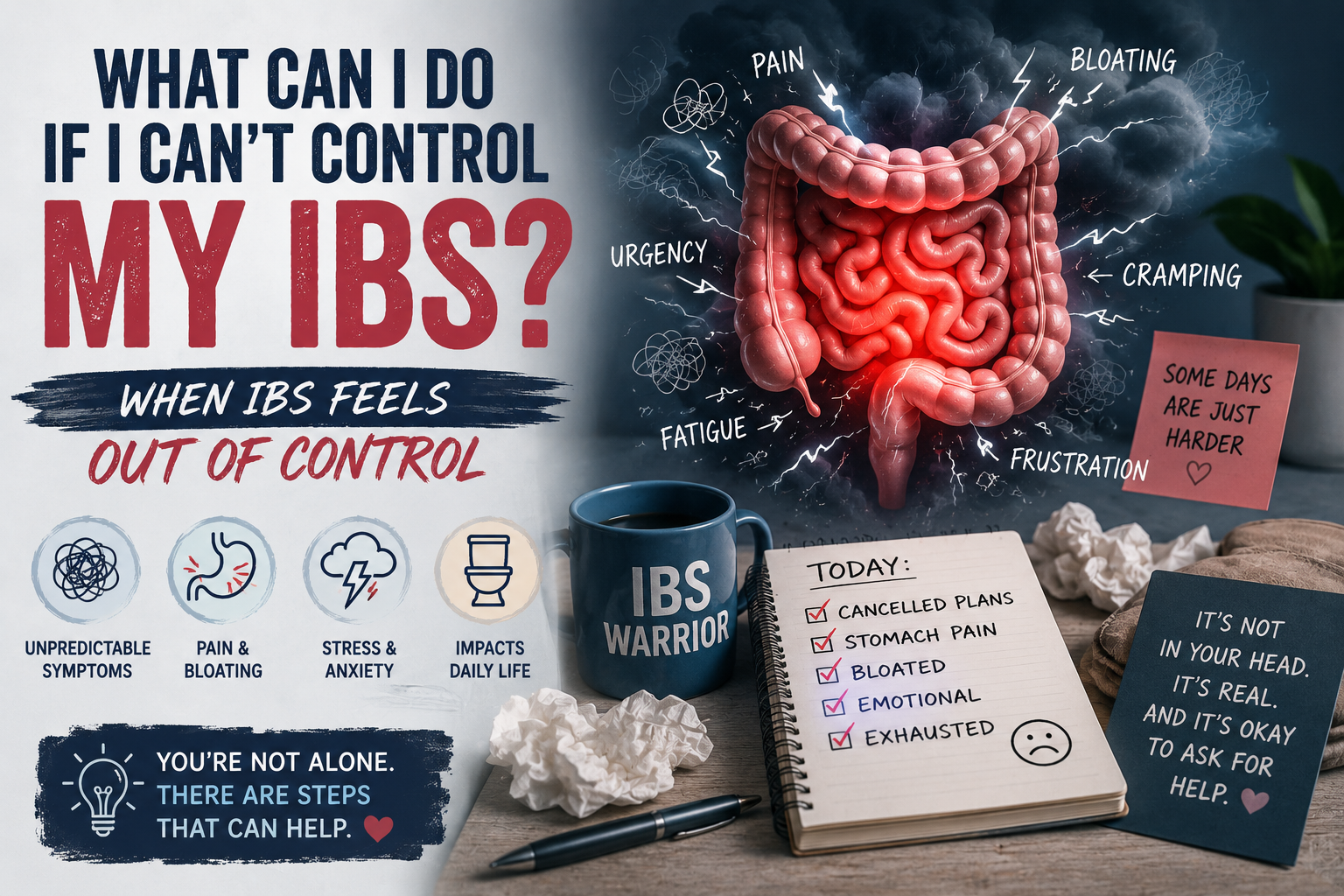 You've read the lists. You've cut foods. You've tried supplements, tracked meals, googled symptoms at midnight. And you're still not where you want to be.
If your IBS symptoms feel impossible to manage, you're not failing, you may just be missing a few pieces of the puzzle. IBS is a disorder of gut-brain interaction, which means it rarely has one single fix. The good news is that there are more levers to pull than most people realize.
Here's a structured way to think through what might still help.
1. Check Whether You're Actually Treating IBS
Before adding more strategies, it's worth confirming that IBS is the full picture. Several conditions produce similar symptoms and need different treatment entirely:
SIBO (Small Intestinal Bacterial Overgrowth) — causes gas and diarrhea; treated with specific antibiotics Celiac disease — requires blood tests and biopsy, not just avoiding gluten IBD (Crohn's or Colitis) — ruled out with a colonoscopy Bile acid malabsorption — frequently mistaken for IBS-D Lactose or fructose intolerance — testable with a dietitian's guidance
If you've never had these checked, that's a reasonable first conversation to have with your doctor before assuming your management plan just needs more tweaking.
2. Revisit the Low-FODMAP Diet — But Do All Three Phases
The low-FODMAP diet has the strongest dietary evidence for IBS, but many people only complete the first phase (elimination) and never move forward. The diet is intended to be followed in stages, restriction, reintroduction, and personalization and the goal is to identify your personal triggers, then expand your diet while keeping symptoms manageable.
If you tried it and it "didn't work," a few common culprits are worth examining. Hidden ingredients are easy to miss, onion and garlic appear in sauces, spice blends, stock cubes, and frozen meals, sometimes listed as onion powder, garlic powder, seasoning, or vegetable powder. Other ingredients to watch include inulin, chicory root, fructooligosaccharides, sorbitol, mannitol, and xylitol. often found in protein bars, fiber bars, "high fiber" cereals, and sugar-free products.
There's also the matter of portions. Some foods are low in FODMAPs at a smaller serving but become moderate or high when the amount increases — avocado, sweet potato, certain fruits, nuts, and legumes can all shift categories depending on how much you eat.
And if you're eating several borderline foods together, FODMAP stacking can be a factor combining multiple foods that are each fine individually can create a total FODMAP load that's too high for some people to tolerate comfortably.
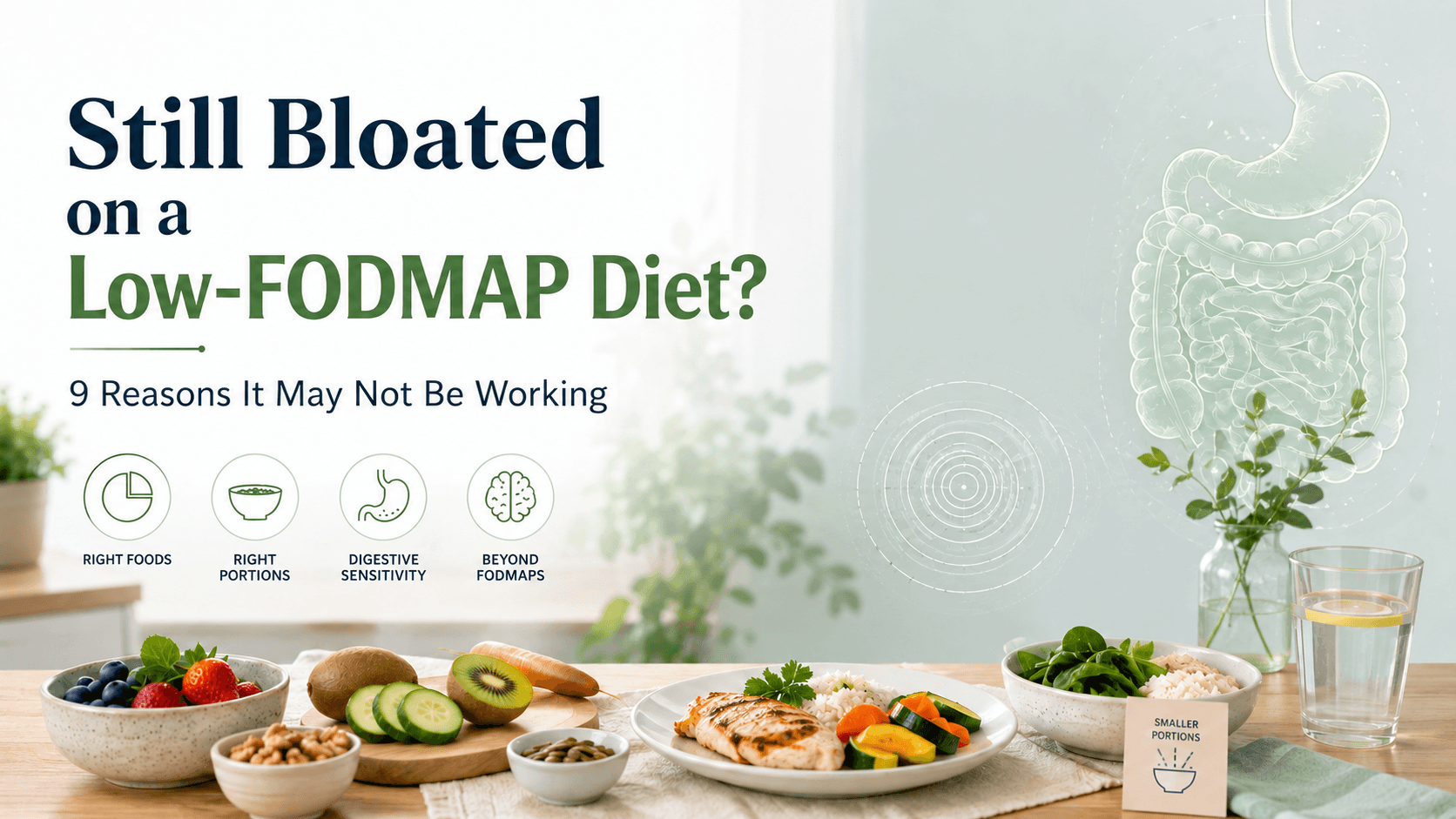
→ Read more: Still Bloated on a Low-FODMAP Diet? 9 Reasons It May Not Be Working
3. Get Your Fiber Strategy Right
"Eat more fiber" is common advice for IBS but the type, amount, and speed of increase all matter. Fiber is not one single substance, and people with IBS do not respond to every type in the same way. Clinical guidance generally favors soluble fiber for overall IBS symptoms, while coarse insoluble sources such as wheat bran can increase urgency, gas, or discomfort for some people.
Psyllium is one of the better-studied fiber supplements for IBS, and it's generally better tolerated than bran-based options. If you've added fiber quickly and felt worse, that's expected. Increasing several high-fiber foods at the same time, or using a supplement that also contains inulin or polyol sweeteners, are common mistakes that can make symptoms worse rather than better.
The practical approach: choose one soluble fiber source, start small, increase gradually, and track what changes.
→ Read more: Soluble vs Insoluble Fiber for IBS: What May Help
4. Take the Gut-Brain Connection Seriously
IBS being a gut-brain disorder isn't a polite way of saying it's imaginary. The brain and digestive tract communicate through the gut-brain axis, and stress can influence gut motility, pain sensitivity, sleep, and eating behavior.
Stressful weeks often come with faster eating, worse sleep, less movement, more caffeine, and more attention to every sensation in the abdomen. all factors that can reinforce one another. Many people who focus only on food find that restricting their diet further produces diminishing returns, while also working on stress and daily rhythm leads to symptoms becoming less frequent and less frightening.
The interventions with the clearest evidence here are gut-directed hypnotherapy and cognitive behavioral therapy (CBT) for IBS not general stress management, but approaches designed specifically around the gut-brain dynamic. Low-dose tricyclic antidepressants are also used in some cases to reduce gut pain sensitivity, independent of any effect on mood.
Psychological therapies such as cognitive behavioral therapy and gut-directed hypnotherapy may help some people with IBS that does not make symptoms imaginary, it gives clinicians another evidence-based tool to consider.
→ Read more: How Managing Anxiety Helped My IBS: A Personal Story
5. Look at What You Haven't Tracked Yet
Most people track food. Fewer track the full picture. If your symptom diary only records what you ate, you're likely missing patterns. Consider also logging:
Sleep quality the night before
Stress level (even just 1–10)
Meal timing and eating speed
Bowel movement form, not just frequency
Menstrual cycle if relevant — hormones significantly affect IBS
Your triggers may also change depending on sleep, stress, menstrual cycles, constipation, illness, medication, or the size of the meal which is why a symptom that seemed linked to one food might actually have had another driver.
6. Ask About IBS-Specific Medications
Many people with IBS haven't been offered medications specifically designed for the condition not just antispasmodics or general laxatives, but treatments that work on IBS mechanisms directly.
IBS Type and Options worth asking about
IBS-D (diarrhea) : Rifaximin, Eluxadoline, Alosetron
IBS-C (constipation) : Linaclotide, Plecanatide, Lubiprostone
Gut pain/sensitivity : Low-dose tricyclics, certain SSRIs
If your care so far has consisted of fiber advice and a suggestion to manage stress, a gastroenterologist referral is a reasonable next step.
7. Know When to Escalate
Pushing for more support isn't giving up, it's using the system correctly. Consider asking for a specialist referral if:
-Symptoms haven't improved meaningfully after 6+ months of effort
- You haven't been offered FODMAP guidance from a trained dietitian
- You haven't been offered FODMAP guidance from a trained dietitian
- You haven't been offered FODMAP guidance from a trained dietitian
- You have any alarm symptoms (blood in stool, unexplained weight loss, fever, persistent vomiting, family history of IBD or colon cancer)
A gastroenterologist can run more targeted tests, confirm there's nothing else going on, and open access to prescription-only treatments. A registered dietitian who specializes in IBS can make the FODMAP process far more effective than going it alone.
The Bigger Picture
Uncontrolled IBS is a signal to reassess, not give up. Most people who find real relief do so through a combination of approaches diet, gut-brain work, appropriate medication, and sometimes professional support rather than through any single fix. The goal isn't a perfectly restricted diet forever. It's understanding your personal triggers well enough to live with as much freedom as possible.
Want to Understand Your IBS Patterns Better?
Understanding that you're experiencing an IBS flare-up is one thing. Figuring out your personal food and symptom patterns is another.
The Practical IBS and Low-FODMAP Workbook gives you practical tools to help organize that process, including:
- 200+ everyday foods
- IBS and low-FODMAP food guidance
- FODMAP and serving information
- 30 everyday recipes
- A 7-day meal plan
- FODMAP stacking guidance
- Daily food and symptom trackers
- Weekly review pages
- Structured reintroduction worksheets
Instead of relying on memory or guessing, use the workbook to track patterns, organize your meals, and build a more personalized approach to managing your IBS symptoms.
👉 Explore the Practical IBS and Low-FODMAP Workbook
Frequently Asked Questions
Why is my IBS getting worse despite trying everything? Worsening symptoms despite effort can mean there's an unidentified trigger, a condition that hasn't been ruled out, or a piece of the puzzle like the gut-brain connection that hasn't been addressed yet. It's a good sign to seek specialist input.
Can IBS ever be fully controlled? Many people achieve very good symptom control and go through extended periods with minimal disruption. Full remission is possible for some. The path there is usually individualized and takes time.
Is the low-FODMAP diet the best diet for IBS? It has the strongest evidence, but it needs to be done correctly and personalized through structured reintroduction. It's not meant to be a permanent elimination diet.
Does stress actually cause IBS symptoms? Stress doesn't cause IBS, but it can meaningfully amplify symptoms through the gut-brain axis. Addressing it alongside diet often produces better results than diet alone.
About this article
Written by Digestimove Team. We combine lived experience with recognized digestive-health guidance and avoid presenting education as personalized treatment.
General references: NIDDK overview of IBS and the American College of Gastroenterology guideline.
Free IBS food list
Make your next meal easier to plan
Get the printable 50 low FODMAP foods list, or explore the full The Practical IBS and Low FODMAP Workbook when you want more detail.
Explore the complete The Practical IBS and Low FODMAP Workbook