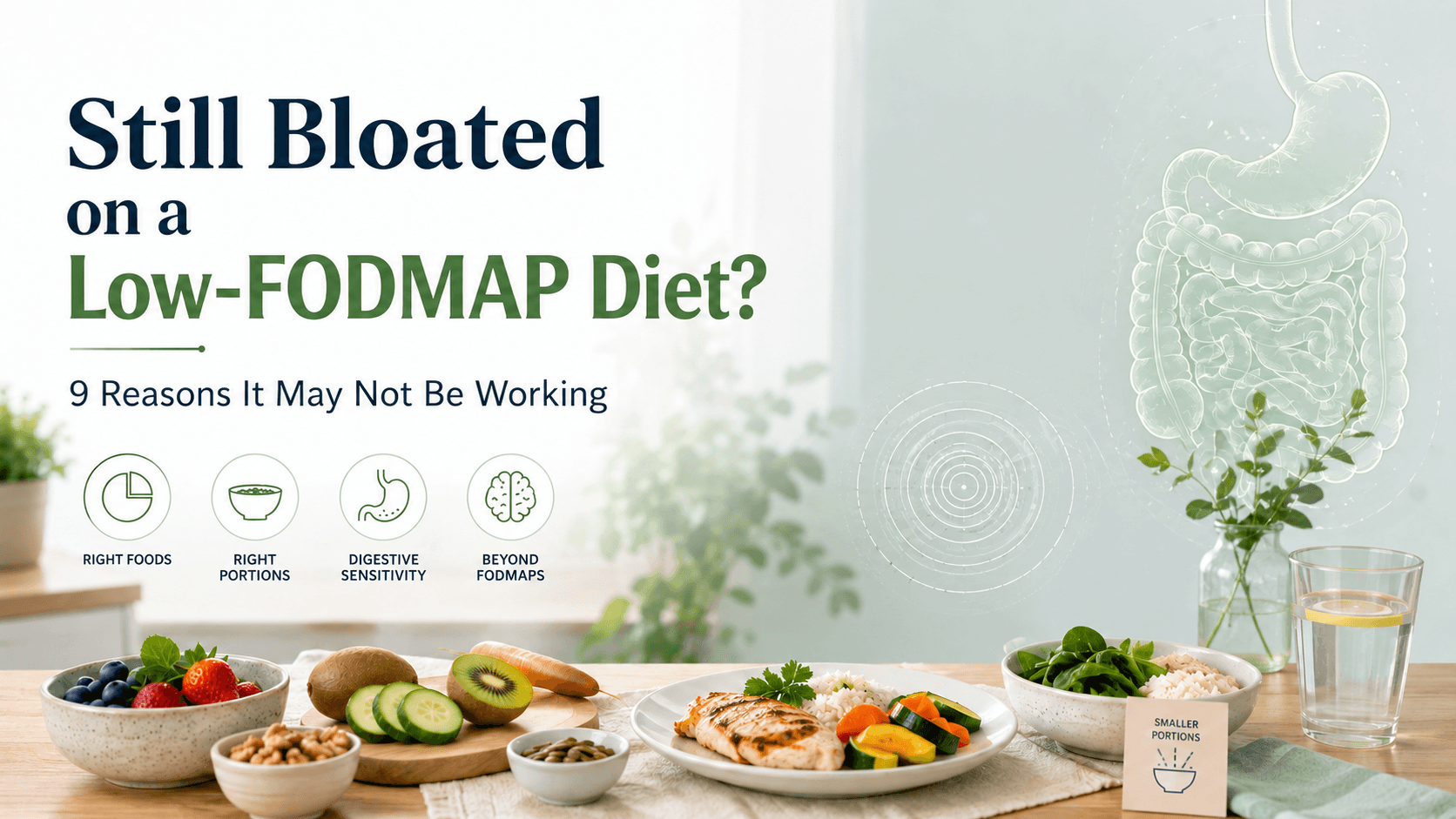
Still Bloated on a Low-FODMAP Diet? 9 Reasons It May Not Be Working
Still bloated while following a low-FODMAP diet? Discover nine possible reasons, including hidden ingredients, portion sizes, FODMAP stacking, fiber, constipation, and stress.
Written by Digestimove Team11 min read
Why Am I Still Bloated on a Low-FODMAP Diet?
You carefully check ingredient labels, avoid high-FODMAP foods, and plan meals that are supposed to be gentle on your digestive system. Yet somehow, you still end the day feeling swollen, uncomfortable, or full of gas.
It can be frustrating, especially when you feel as though you are doing everything correctly.
A low-FODMAP diet can help reduce bloating, abdominal pain, and other digestive symptoms in many people with irritable bowel syndrome. However, it does not guarantee that every symptom will disappear. Bloating can also be influenced by serving sizes, constipation, fiber intake, meal timing, stress, sleep, and triggers unrelated to FODMAPs.
The strict low-FODMAP phase is also intended to be a limited trial rather than a permanent diet. It is normally followed by structured reintroduction and personalization, preferably with support from a registered dietitian who understands IBS.
Here are nine possible reasons you may still feel bloated while eating low-FODMAP foods.
1. Your Portions May Be Too Large
One of the most common low-FODMAP mistakes is focusing only on the type of food while ignoring the amount.
“Low-FODMAP” does not always mean unlimited.
Some foods are low in FODMAPs at a smaller serving but become moderate or high in FODMAPs when the serving increases. Avocado, sweet potato, canned chickpeas, certain fruits, bread, pasta, nuts, and other foods can have different FODMAP ratings at different amounts.
For example, you might use a low-FODMAP portion of a particular food at breakfast and tolerate it well. However, doubling or tripling that amount in one meal may give you a much larger dose of fermentable carbohydrates.
This does not mean you need to weigh every bite forever. It means serving sizes can be useful during the elimination and testing stages.
What to try
Check the tested serving size rather than relying only on a general list of “safe” foods. For one week, measure foods with known serving limits and record whether your bloating improves.
Be especially careful with ingredients that are easy to overeat, such as fruit, nuts, legumes, snack bars, sauces, and large smoothie portions.
2. You May Be Combining Too Many FODMAP Foods
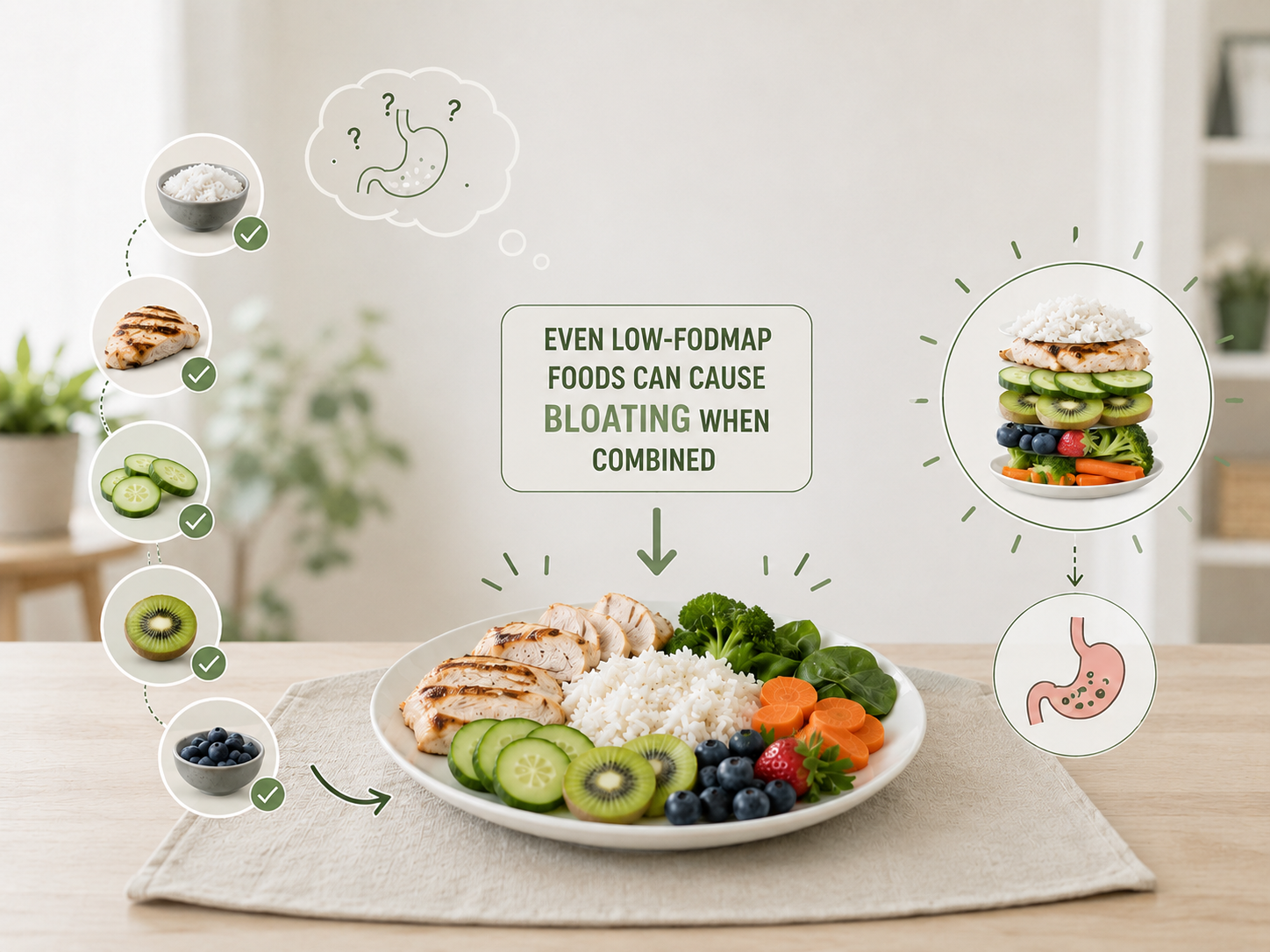
Another possible issue is known as FODMAP stacking.
FODMAP stacking happens when several foods that are acceptable in individual portions are combined in the same meal, creating a larger overall FODMAP load than your digestive system can comfortably tolerate. Monash University recommends considering stacking mainly when a low-FODMAP diet has helped overall but unexplained symptoms continue.
Imagine preparing a large breakfast bowl containing oats, fruit, yogurt, nuts, seeds, and a sweetener. Each ingredient may fit within a low-FODMAP serving when considered separately. However, larger portions of several limited foods in the same bowl may create a total load that is too much for your individual tolerance.
FODMAP stacking does not affect everyone in the same way. Some people can combine several foods without a problem, while others notice symptoms when meals become large or complicated.
What to try
Temporarily simplify your meals.
Instead of combining six or seven different ingredients, build a meal around:
One protein source One carbohydrate source Two or three vegetables One fruit serving, if desired
You can then add variety gradually while tracking your symptoms.
3. Hidden Ingredients May Be Causing Symptoms
A meal can look low-FODMAP while still containing ingredients that are easy to miss.
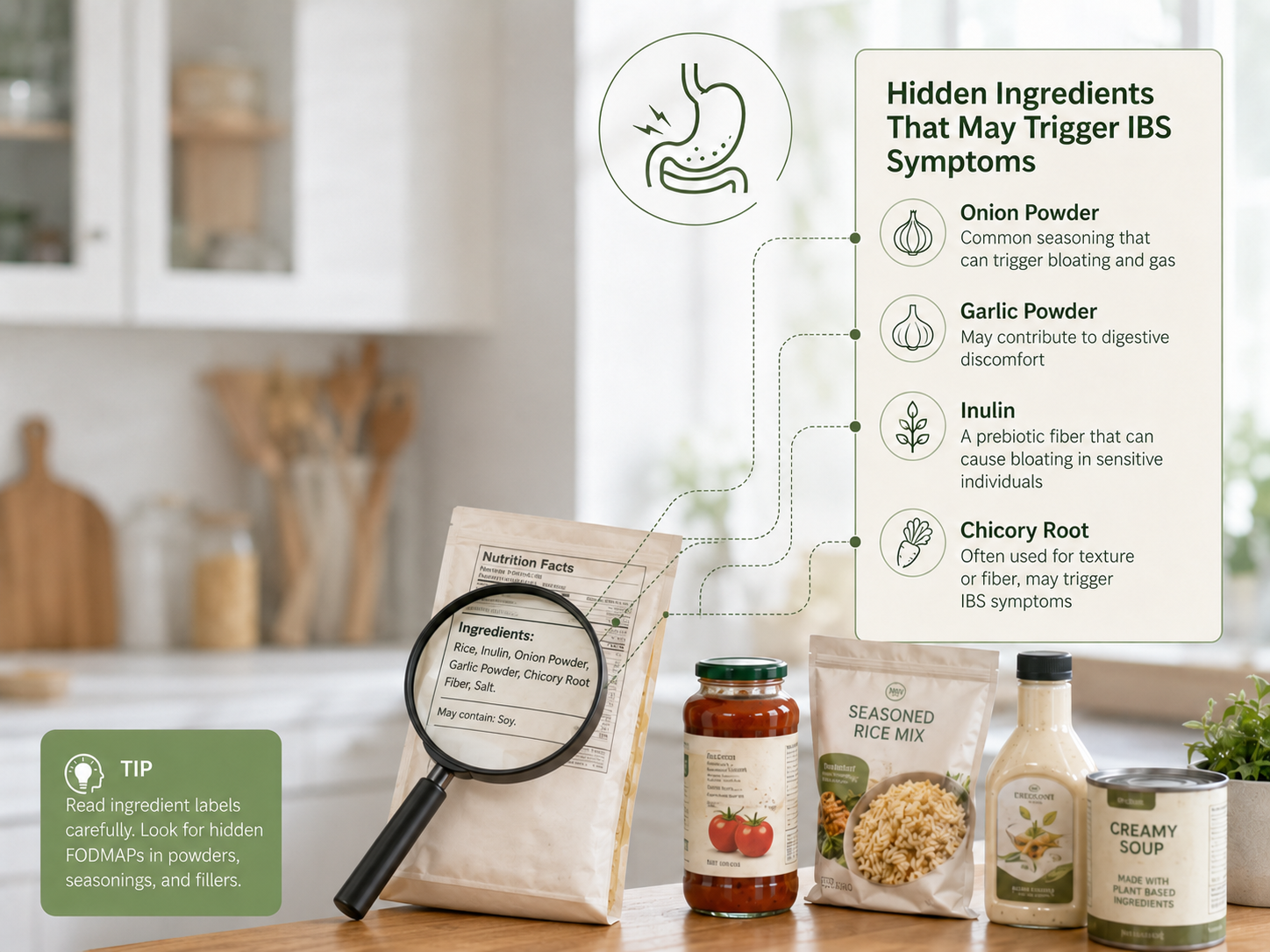
Onion and garlic are commonly added to sauces, soups, marinades, spice mixtures, stock cubes, flavored rice, frozen meals, and restaurant foods. They may appear on labels as onion powder, garlic powder, seasoning, flavoring, vegetable powder, or spice blend.
Other ingredients worth checking include:
Inulin Chicory root or chicory fiber Fructooligosaccharides, sometimes written as FOS High-fructose corn syrup Honey Concentrated fruit juice Sorbitol Mannitol Maltitol Xylitol
Inulin and chicory root are often added to protein bars, fiber bars, breakfast cereals, yogurts, meal-replacement products, and foods marketed as “high fiber” or “gut healthy.” Sugar alcohols may appear in sugar-free sweets, chewing gum, drinks, and protein products.
The American College of Gastroenterology advises that some people with IBS benefit from avoiding certain sugar substitutes, while Monash University recommends checking the complete ingredient list instead of assuming that products labeled gluten-free, natural, high-protein, or plant-based are automatically low-FODMAP.
What to try
Read ingredient labels from beginning to end. Pay particular attention to:
Seasoning blends Sauces and dressings Soup mixes Flavored rice products Protein and energy bars Plant-based meat products Fiber-enriched foods Sugar-free products
When possible, choose plain ingredients and add your own low-FODMAP herbs and seasonings.
4. You Increased Fiber Too Quickly
Fiber is important for digestive health, but increasing it too quickly can cause additional gas, pressure, cramping, and bloating.
Gut bacteria ferment certain fibers. This is a normal process, but a sudden increase can produce more gas than your digestive system is used to handling.
The type of fiber also matters. Soluble fiber, including psyllium, is often better tolerated by people with IBS than coarse insoluble fiber. Large amounts of bran or other insoluble fibers may worsen pain and bloating in some people.
The National Institute of Diabetes and Digestive and Kidney Diseases recommends increasing fiber gradually. Adding approximately two to three grams per day may help reduce the chance of gas and bloating compared with making a sudden large change.
What to try
If you recently added chia seeds, flaxseed, oats, psyllium, high-fiber cereal, large vegetable portions, or fiber supplements, reduce the amount temporarily and build it up more slowly.
Also remember to drink enough fluid. Increasing fiber without enough fluid may make constipation and discomfort worse.
Change one thing at a time. Otherwise, it becomes difficult to identify which type or amount of fiber is affecting you.
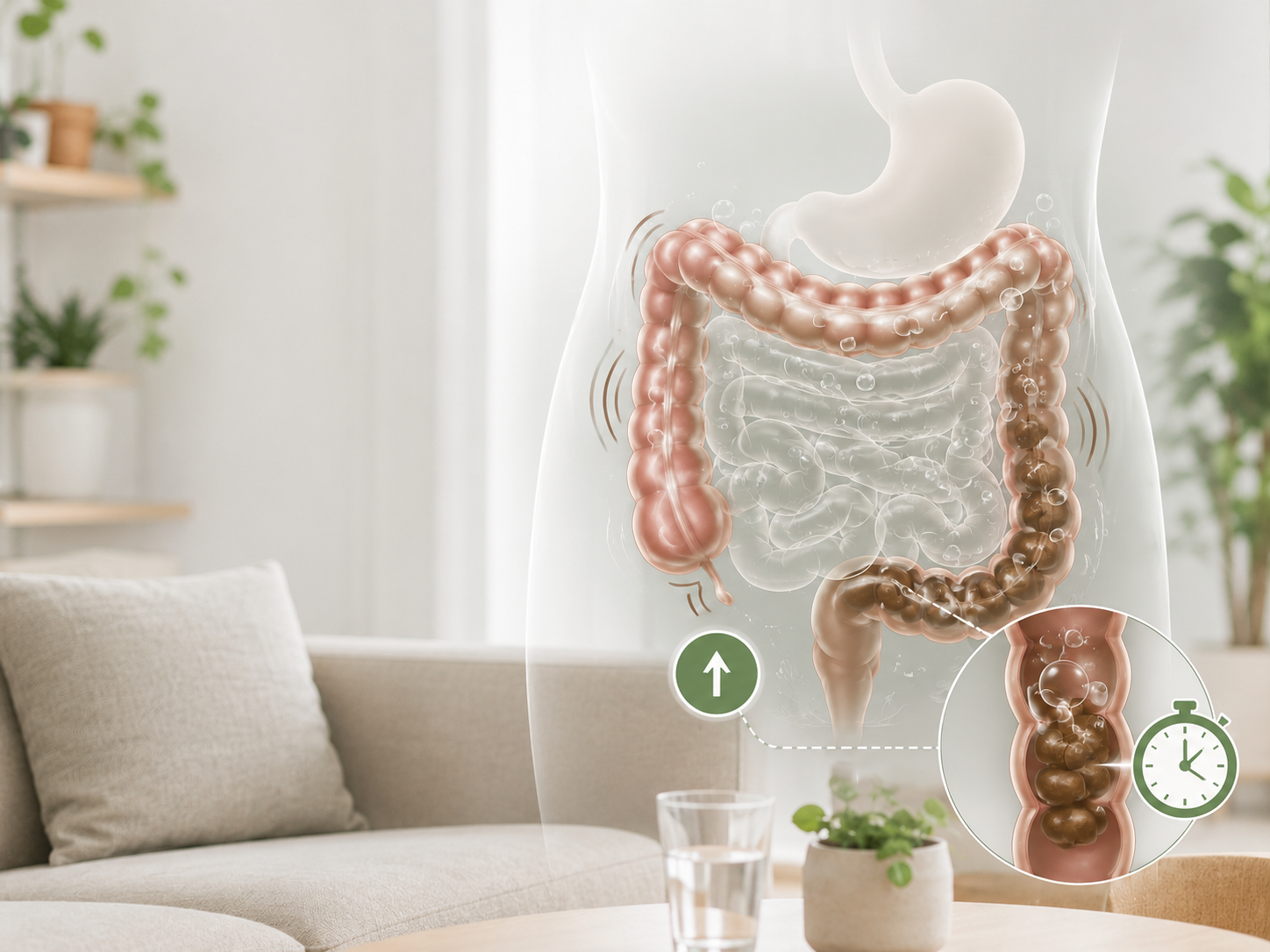
5. Constipation May Be Trapping Gas
Constipation is not limited to having only one or two bowel movements per week.
You may still be constipated if you:
Pass hard, dry, or lumpy stools Need to strain Feel blocked Feel that you have not completely emptied your bowel Need several attempts to finish a bowel movement Have small bowel movements but remain uncomfortable
The NIDDK includes the feeling that not all stool has passed as a symptom of constipation. NICE guidance also notes that people with IBS commonly report incomplete evacuation.
When stool moves slowly or remains in the colon, gas may become more noticeable. The American College of Gastroenterology identifies constipation as a common cause of abdominal bloating and visible distension.
This means that removing more foods may not solve the problem if incomplete emptying is contributing to your bloating.
What to try
Track more than bowel-movement frequency. Record:
Stool consistency Straining Urgency Incomplete emptying Abdominal pressure How you feel after using the bathroom
Regular movement, adequate fluid, an appropriate amount of fiber, and a consistent bathroom routine may help. Persistent constipation should be discussed with a healthcare professional, particularly if diet changes have not improved it.
6. Large or High-Fat Meals May Be the Problem
A meal can be low in FODMAPs and still trigger symptoms because of its size, fat content, or the way it is eaten.
Some people notice more bloating after high-fat meals. Fat is not a FODMAP, but large amounts may affect digestive function and increase feelings of fullness or bloating in sensitive people.
Meal habits can also contribute. Common problems include:
Eating very large meals Eating quickly Skipping meals and overeating later Eating at irregular times Consuming many fried or processed foods Drinking large amounts of liquid with meals Drinking through a straw Chewing gum frequently Talking while eating and swallowing additional air
Carbonated drinks introduce extra gas into the digestive system. Caffeine may stimulate the bowel, while alcohol and spicy foods can worsen symptoms in some people. NHS guidance for IBS recommends eating regularly, slowing down during meals, and limiting fatty foods, excessive caffeine, alcohol, and fizzy drinks.
What to try
For one week, experiment with:
Smaller meals Regular meal times Slower eating Thorough chewing Fewer fried foods Less caffeine Still water instead of fizzy drinks
You do not need to remove everything at once. Choose one or two changes and observe the result.
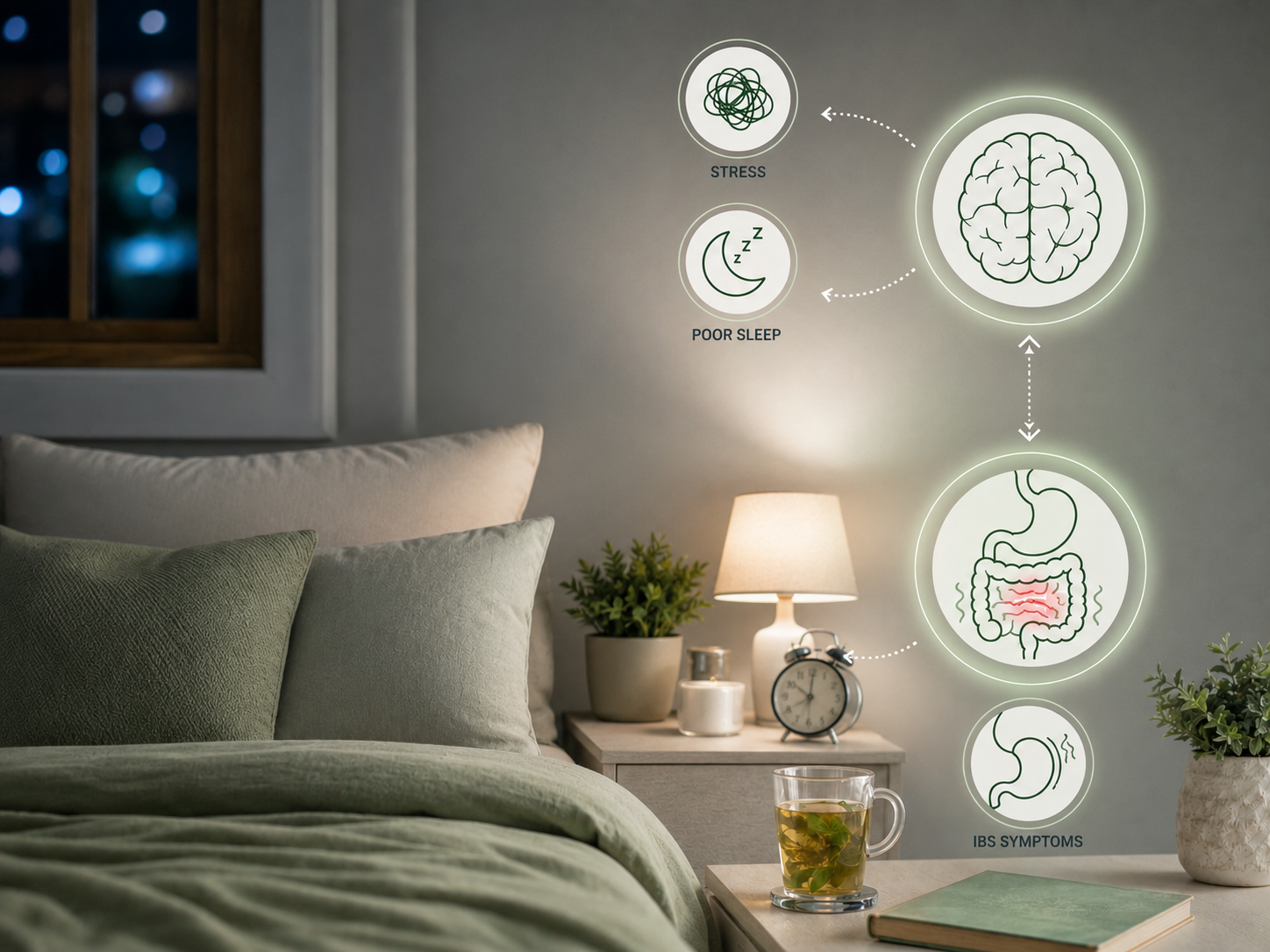
7. Stress and Poor Sleep Can Worsen Gut Sensitivity
IBS is classified as a disorder of gut-brain interaction. This means that the brain and digestive system continuously communicate through nerves, hormones, immune signals, and other pathways. Problems in this communication may affect bowel movement, pain perception, and sensitivity to gas or stool.
Stress does not mean that IBS is imaginary or “all in your head.”
The digestive symptoms are real. However, stress can make the gut more sensitive, meaning that an amount of gas or intestinal stretching that might normally go unnoticed can feel uncomfortable or painful.
Poor sleep may also make symptoms harder to manage. NIDDK includes getting enough sleep, relaxation training, and gut-directed psychological therapies among the lifestyle and treatment approaches that may help some people with IBS.
What to try
Pay attention to whether symptoms become worse after:
Several nights of poor sleep A stressful work period Travel Anxiety around eating Major life changes Eating while rushed or upset
Helpful strategies may include a consistent sleep schedule, gentle exercise, relaxation exercises, slow breathing, mindfulness, or working with a qualified professional who understands the gut-brain connection.
These approaches are not a replacement for medical care or dietary treatment. They are another part of IBS management.
8. Your Trigger May Not Be a FODMAP
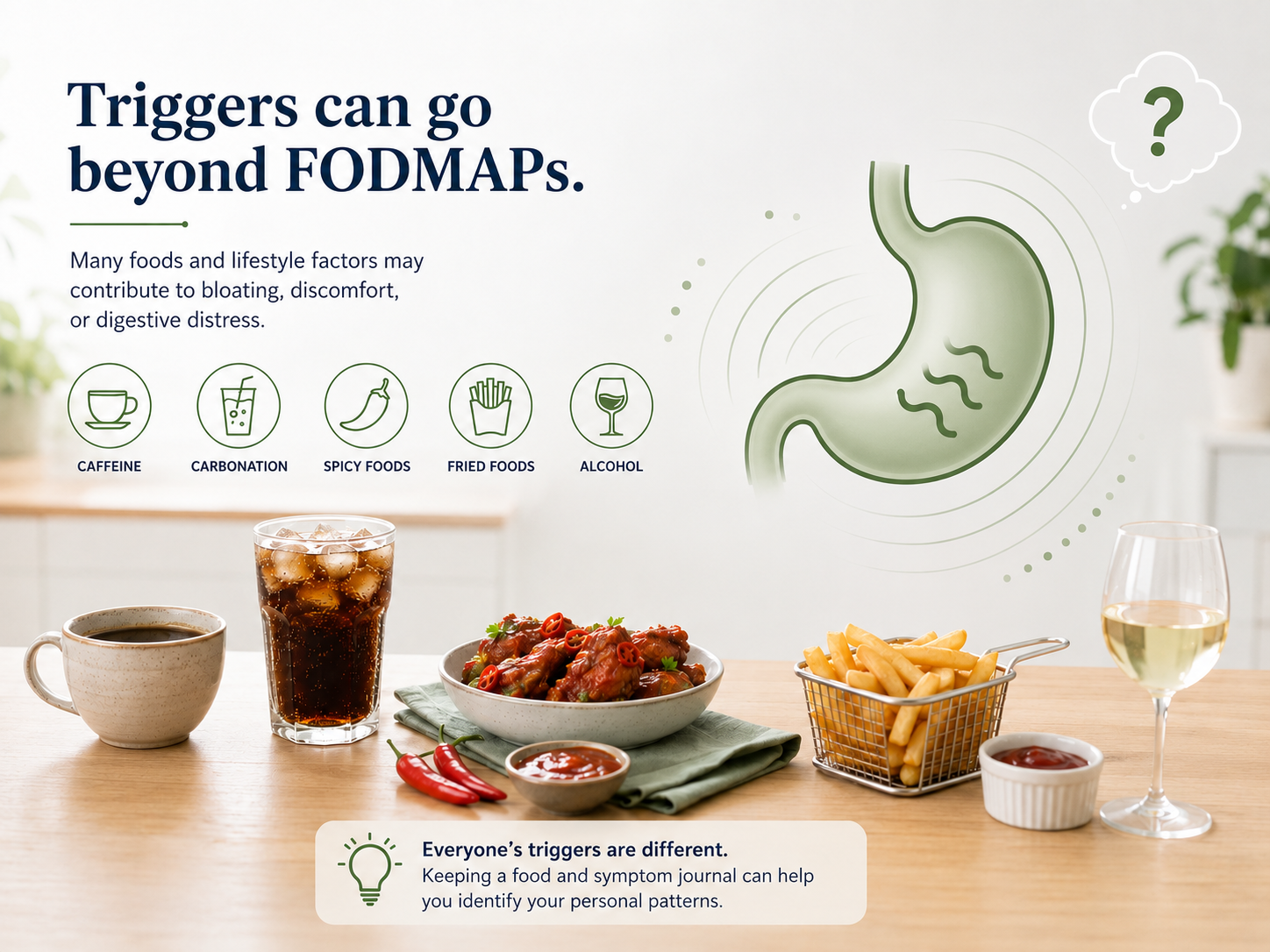
Not every digestive trigger is a FODMAP.
You may react to:
Large meals Fried or greasy foods Spicy foods Excess caffeine Alcohol Carbonated drinks Eating too quickly Certain food additives An individual food intolerance A sudden increase in fiber
A food can therefore be technically low-FODMAP but still cause symptoms for another reason.
For example, black coffee may be low in FODMAPs, but caffeine can stimulate the bowel. Plain fried potatoes may contain few FODMAPs in an appropriate serving, but the meal’s fat content may still increase fullness or bloating. Some alcoholic drinks may be low in FODMAPs, but alcohol can irritate the digestive system and worsen symptoms for some people.
Your triggers may also change depending on sleep, stress, menstrual cycles, constipation, illness, medication, or the size of the meal.
What to try
Keep a food and symptom diary for at least one or two weeks. Record:
What you ate Approximate portions Meal time Symptoms Bowel movements Stress level Sleep quality
Look for repeated patterns rather than blaming a food after one uncomfortable day.
9. It May Not Be IBS Alone
Persistent bloating should not automatically be blamed on IBS.
Other conditions can produce symptoms that resemble IBS, including constipation, lactose intolerance, celiac disease, inflammatory bowel disease, infections, and other digestive or medical conditions. Healthcare professionals diagnose IBS by reviewing the symptom pattern and determining whether testing is needed to rule out other causes.
Arrange a medical assessment if bloating is new, persistent, becoming more severe, or not improving despite reasonable diet and lifestyle changes.
Seek prompt medical advice when bloating is accompanied by:
Blood in the stool or rectal bleeding Unexplained weight loss Persistent vomiting Fever or chills Iron-deficiency anemia A hard swelling or new lump in the abdomen Ongoing or severe abdominal pain A major unexplained change in bowel habits
Unexplained weight loss, rectal bleeding, anemia, and abdominal masses are recognized warning signs that require further assessment. Bloating with vomiting, fever, or an abdominal lump should also be medically evaluated.
Do not keep making your diet more restrictive without knowing what you are treating. Excessive restriction may make it harder to meet your nutritional needs and can create additional stress around eating.
What Should You Do Next?
If you remain bloated on a low-FODMAP diet, avoid immediately removing another long list of foods.
Instead, review the situation step by step:
Check your serving sizes. Simplify large or complicated meals. Look for hidden ingredients. Review how quickly you increased fiber. Consider constipation and incomplete emptying. Reduce very large or high-fat meals. Examine your meal timing and eating speed. Track sleep, stress, and non-FODMAP triggers. Speak with a healthcare professional if symptoms persist.
A low-FODMAP diet should help you understand your personal tolerance—not leave you afraid of food.
The long-term goal is usually to build the most varied diet you can comfortably tolerate through structured testing and personalization.
Frequently Asked Questions
Can low-FODMAP foods still cause bloating?
Yes. A food may be low-FODMAP in a tested serving but become higher in FODMAPs at a larger amount. Bloating can also be caused by constipation, high-fat meals, carbonated drinks, rapid fiber increases, meal habits, or individual sensitivity.
How long does it take for a low-FODMAP diet to work?
The American College of Gastroenterology reports that people who respond may notice a benefit within approximately two to six weeks. The strict phase should not continue indefinitely without reintroduction and personalization.
Should I stay on a strict low-FODMAP diet forever?
Generally, no. The diet is usually followed in stages: restriction, reintroduction, and personalization. The goal is to identify your triggers and then expand your diet while keeping symptoms manageable. Working with a gastrointestinal dietitian can help reduce unnecessary restriction.
Stop Guessing Which Foods Work for Your Gut
Trying to remember every food, portion, ingredient, and possible trigger can quickly become overwhelming.
A Practical Way to Track Your Patterns
The Practical IBS and Low-FODMAP Workbook gives you practical tools to help organize this process, including:
200+ everyday foods
IBS and low-FODMAP food guidance
FODMAP and serving information
30 everyday recipes
A 7-day meal plan
FODMAP stacking guidance
Daily food and symptom trackers
Weekly review pages
Structured reintroduction worksheets
Instead of relying on memory or guessing, use the workbook to track patterns, organize your meals, and build a more personalized approach to managing your IBS symptoms.
👉 Explore the Practical IBS and Low-FODMAP Workbook and start tracking your patterns today.
About this article
Written by Digestimove Team. We combine lived experience with recognized digestive-health guidance and avoid presenting education as personalized treatment.
General references: NIDDK overview of IBS and the American College of Gastroenterology guideline.
Free IBS food list
Make your next meal easier to plan
Get the printable 50 low FODMAP foods list, or explore the full The Practical IBS and Low FODMAP Workbook when you want more detail.
Explore the complete The Practical IBS and Low FODMAP Workbook