What Are the 10 Worst Foods for IBS? Foods That May Trigger Symptoms
What are the 10 worst foods for IBS? Discover common foods that may trigger bloating, gas, abdominal pain, diarrhea, and other IBS symptoms.
Written by Digestimove Team8 min read
What Are the 10 Worst Foods for IBS?
If you have irritable bowel syndrome (IBS), you may have noticed that certain foods seem to make your symptoms worse. Bloating, abdominal pain, excessive gas, diarrhea, constipation, or changes in bowel habits can sometimes occur after eating particular foods.
So, what are the 10 worst foods for IBS?
There isn't one universal list of foods that every person with IBS must avoid. IBS food triggers are highly individual. However, many foods commonly associated with IBS symptoms are high in FODMAPs—short-chain carbohydrates that can be poorly absorbed and fermented in the gut. The resulting gas and fluid changes can contribute to digestive symptoms in some people with IBS.
Here are 10 foods or food groups to watch if you notice certain meals trigger your symptoms.
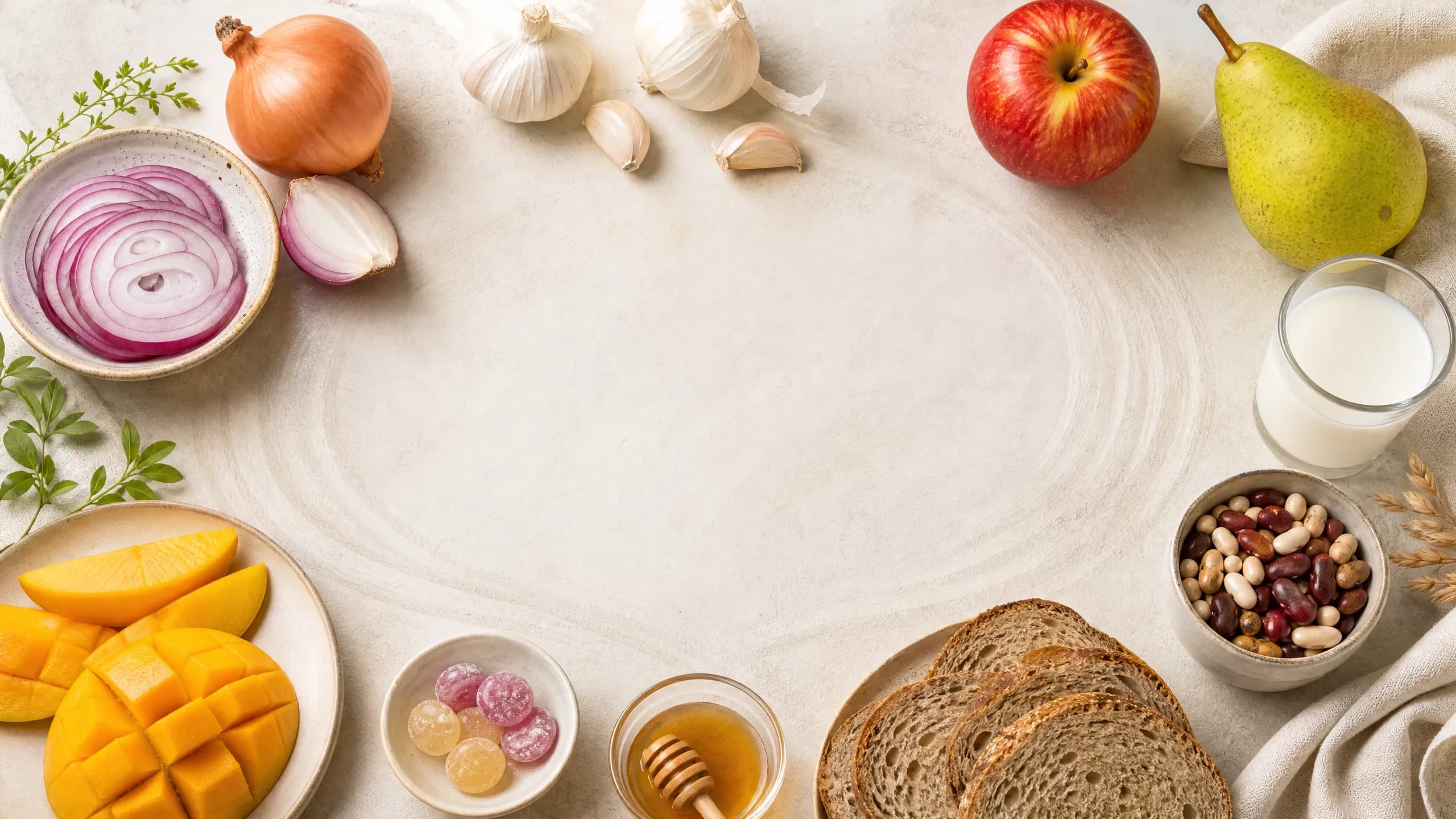
1. Onions
Onions are one of the foods most commonly discussed when it comes to IBS and the low-FODMAP diet.
They are high in fructans, a type of FODMAP. Fructans can be difficult for some people with IBS to absorb, potentially contributing to gas, bloating, abdominal discomfort, or changes in bowel movements.
Onions can also be easy to overlook because they are used in many everyday foods, including soups, sauces, stews, marinades, and prepared meals.
You might find onions particularly troublesome if you notice:
Bloating after meals
Excessive gas
Abdominal discomfort
Changes in bowel habits
You don't necessarily have to avoid onions forever. Your personal tolerance and portion size matter.
2. Garlic
Garlic is another major source of fructans and can be a significant trigger for some people with IBS.
It appears in countless recipes, so even when you're not deliberately eating garlic, it may be present in sauces, seasonings, marinades, dressings, and processed foods.
If garlic seems to trigger symptoms, you may be able to use alternatives such as garlic-infused oil, which can provide garlic flavor without the same FODMAP load because the relevant fructans are not absorbed into the oil.
The American Gastroenterological Association specifically includes reducing onions and garlic among practical dietary changes that may help people following a low-FODMAP approach.
3. Apples
Apples may be healthy, but that doesn't necessarily mean they will be comfortable for everyone with IBS.
Apples contain fructose and sorbitol, both of which can contribute to digestive symptoms in people who are sensitive to these FODMAPs.
Possible symptoms include:
Bloating
Gas
Abdominal pain
Loose stools
If apples seem to bother you, don't assume that all fruit will cause problems. Different fruits contain different types and amounts of FODMAPs.
4. Pears
Pears are another fruit that can be problematic for some people with IBS.
They contain excess fructose and sorbitol, making them a potentially significant source of FODMAPs.
If you regularly experience bloating, gas, or diarrhea after eating pears, they may be worth tracking in your food and symptom diary.
Again, the goal isn't necessarily to eliminate pears permanently. Identifying your individual tolerance is more useful than assuming every person with IBS reacts the same way.
5. Milk and Other High-Lactose Dairy Products
Milk, yogurt, ice cream, and some soft dairy products contain lactose, the naturally occurring sugar in milk.
Lactose is a FODMAP. If your body has difficulty digesting lactose, eating larger amounts may lead to bloating, gas, abdominal discomfort, or diarrhea.
However, this does not mean that everyone with IBS needs to avoid dairy.
Some people tolerate smaller portions, while others may do better with lactose-free alternatives.
It's also important to understand that dairy and lactose aren't the same thing. Some dairy products are naturally lower in lactose, and lactose-free dairy products can still provide dairy nutrients without the same lactose content.
6. Beans and Lentils
Beans and lentils can be nutritious sources of protein and fiber, but they can also be difficult for some people with IBS.
They contain galacto-oligosaccharides (GOS), a type of FODMAP that can be fermented by gut bacteria.
That fermentation can produce gas and contribute to bloating or abdominal discomfort.
If beans consistently cause symptoms, portion size may matter. Some people may tolerate smaller servings better than large portions.
This is one reason why an individualized approach is important rather than simply labeling all beans as "bad" for IBS.
7. Wheat-Based Foods
Wheat-based foods—including many breads, cereals, crackers, and pasta products—can be problematic for some people with IBS.
One important point is often misunderstood:
Wheat and gluten are not the same thing as FODMAPs.
Wheat products can contain fructans, which are FODMAPs. This means someone may experience symptoms from wheat-based foods without necessarily having a problem with gluten.
NIDDK notes that wheat and rye products can be sources of FODMAPs.
It's also important not to assume that everyone with IBS needs to follow a gluten-free diet. The AGA notes that research on gluten-free diets in IBS has produced mixed results.
8. Certain High-FODMAP Fruits
Some fruits can be particularly difficult for people with IBS because they contain excess fructose, polyols, or other FODMAPs.
Examples include:
Mangoes Cherries
Watermelon
Plums
Nectarines
NIDDK lists several of these fruits among foods that can contain FODMAPs.
This doesn't mean fruit is bad for IBS.
In fact, fruit can be an important part of a balanced diet. The more useful question is:
Which fruits, in what portions, can you tolerate comfortably?
9. Sugar-Free Candy and Chewing Gum
Sugar-free products can be an unexpected IBS trigger.
Many sugar-free sweets, candies, mints, and chewing gums contain sugar alcohols such as:
Sorbitol
Mannitol
Xylitol
Maltitol
These substances belong to a group of FODMAPs called polyols.
For some people, consuming larger amounts can lead to gas, bloating, abdominal discomfort, or diarrhea.
This is why checking the ingredient list on "sugar-free" products can be useful if you frequently experience symptoms after eating them.
10. Honey and High-Fructose Sweeteners
Honey and some sweeteners containing high amounts of fructose can be problematic for people who are sensitive to excess fructose.
NIDDK includes honey and foods containing high-fructose corn syrup among foods that can contain FODMAPs.
These ingredients can appear in foods and drinks that don't immediately seem like obvious IBS triggers, including:
Sweetened drinks
Sauces
Desserts
Cereals
Snack foods
Packaged foods
Checking ingredient labels can therefore be just as important as paying attention to obvious trigger foods.
What Is the Worst Food for IBS?
There isn't a single food that can accurately be called the worst food for everyone with IBS.
For one person, onions may cause severe bloating while apples cause no problems. For another person, dairy may be the bigger trigger. Someone else may tolerate all of these foods in small portions.
Your symptoms can also depend on portion size, what you eat alongside a food, and how much of a particular FODMAP you consume across the day.
Research on FODMAP reintroduction supports this personalized approach. In a recent randomized reintroduction study, people with IBS showed different patterns of FODMAP sensitivity rather than reacting identically to every FODMAP group.
Do You Have to Avoid These Foods Forever?
No, not necessarily.
This is one of the most important things to understand about the low-FODMAP diet.
The goal isn't to permanently eliminate every food that contains FODMAPs.
The American Gastroenterological Association describes the low-FODMAP approach as a three-stage process:
1- Restriction
2- Reintroduction
3- Personalization
The restriction phase should generally last no more than 4–6 weeks, followed by systematic reintroduction and personalization based on individual tolerance.
The American College of Gastroenterology also recommends alimited trial of a low-FODMAP diet for people with IBS to improve overall symptoms.
That means the ultimate goal is not necessarily to eat the smallest possible number of foods.
The goal is to discover which foods and portions you personally tolerate while maintaining a varied, nutritious diet.
Want to Understand Your IBS Patterns Better?
Understanding that you're experiencing an IBS flare-up is one thing. Figuring out your personal food and symptom patterns is another.
The Practical IBS and Low-FODMAP Workbook gives you practical tools to help organize that process, including:
200+ everyday foods
IBS and low-FODMAP food guidance
FODMAP and serving information
30 everyday recipes
A 7-day meal plan
FODMAP stacking guidance
Daily food and symptom trackers
Weekly review pages
Structured reintroduction worksheets
Instead of relying on memory or guessing, use the workbook to track patterns, organize your meals, and build a more personalized approach to managing your IBS symptoms.
👉 Explore the Practical IBS and Low-FODMAP Workbook
How to Find Your Personal IBS Trigger Foods
Instead of eliminating everything on this list at once, consider tracking your meals and symptoms.
For each meal, record:
What you ate Approximate portion size Time of the meal Bloating Abdominal pain Gas Diarrhea Constipation Other noticeable symptoms
After several days or weeks, patterns may become easier to recognize.
For example, you might discover that:
Onions + large portion → bloating
while:
Small amount of onion → no noticeable symptoms
That information can be much more useful than simply writing "onions are bad for me."
A food and symptom diary can also provide useful information to discuss with a doctor or registered dietitian.
What Can You Eat Instead?
If some of these foods trigger your symptoms, you don't have to give up on eating enjoyable meals.
Depending on your individual tolerance, alternatives may include lower-FODMAP options such as:
Oats Rice Quinoa Potatoes Eggs Firm tofu Lactose-free dairy products Certain berries Citrus fruits Kiwi Carrots Cucumbers Spinach
However, "low-FODMAP" does not automatically mean "better for everyone with IBS." Your individual response still matters.
The Bottom Line
So, what are the 10 worst foods for IBS?
Foods commonly associated with IBS symptoms include onions, garlic, apples, pears, high-lactose dairy products, beans and lentils, wheat-based foods, certain high-FODMAP fruits, sugar-free products containing polyols, and honey or high-fructose sweeteners.
But there is an important distinction:
These aren't universally "bad" foods. They're foods that may trigger symptoms in some people with IBS.
The most useful approach is to identify your personal triggers, consider portion sizes, and avoid unnecessary long-term restriction. A low-FODMAP diet can be useful for some people with IBS, but it is designed to move from restriction toward reintroduction and personalization rather than permanent elimination.
If your IBS symptoms are persistent, severe, or changing, speak with a healthcare professional rather than assuming that food is the only possible cause.
About this article
Written by Digestimove Team. We combine lived experience with recognized digestive-health guidance and avoid presenting education as personalized treatment.
General references: NIDDK overview of IBS and the American College of Gastroenterology guideline.
Free IBS food list
Make your next meal easier to plan
Get the printable 50 low FODMAP foods list, or explore the full The Practical IBS and Low FODMAP Workbook when you want more detail.
Explore the complete The Practical IBS and Low FODMAP Workbook