Soluble vs Insoluble Fiber for IBS: What May Help
Learn how soluble and insoluble fiber can affect IBS-C, IBS-D, gas, and bloating, plus how to increase fiber gradually and safely.
Written by Digestimove Team3 min read
Why fiber advice for IBS can feel confusing
Fiber is not one single substance, and people with IBS do not respond to every type in the same way. The amount, texture, fermentability, fluid intake, and speed of change all matter.
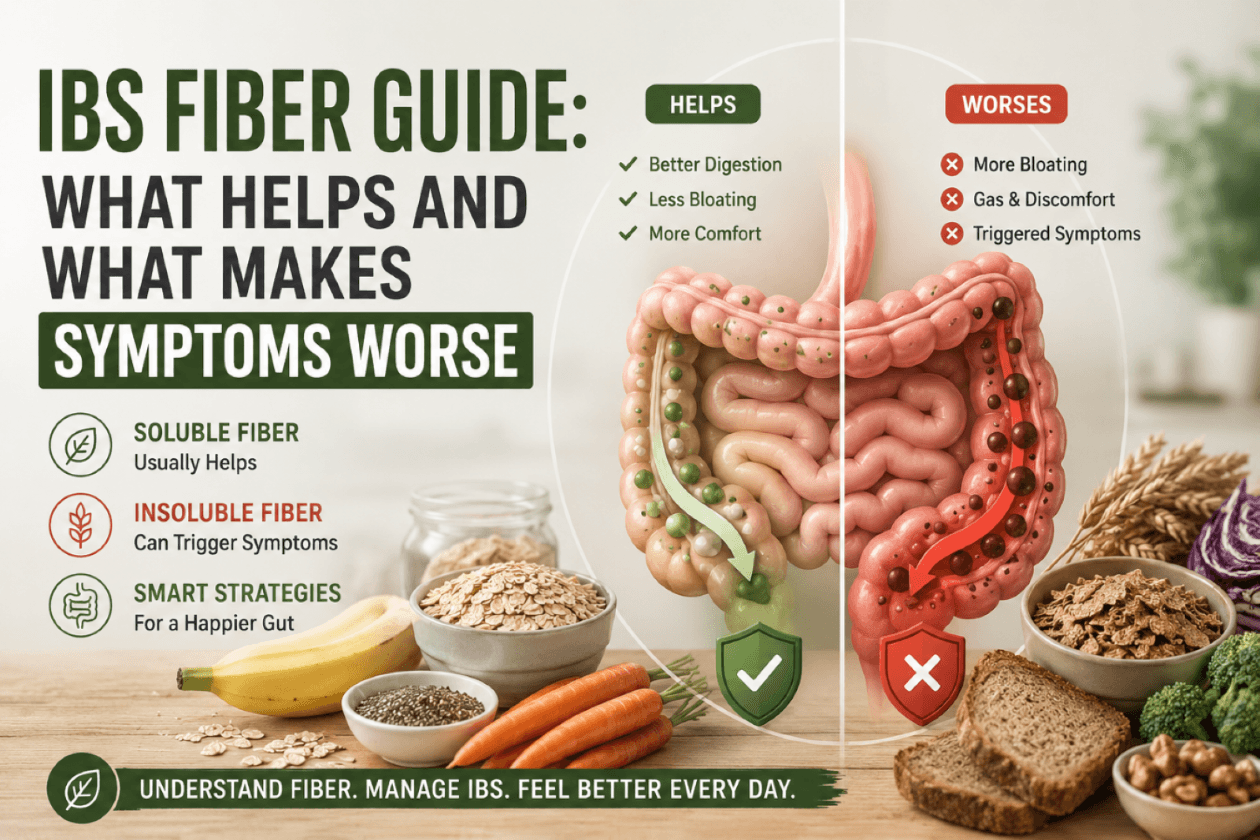
Clinical guidance generally favors soluble fiber for overall IBS symptoms. Insoluble fiber is not automatically harmful, but coarse sources such as wheat bran can increase urgency, gas, or discomfort for some people.
Soluble fiber
Soluble fiber absorbs water and can form a gel. Depending on the source and dose, it may soften hard stool, add form to loose stool, and support regularity.
Common sources include:
- Oats
- Psyllium husk
- Chia seeds
- Kiwi
- Carrots
- Some fruits and legumes in tolerated portions
Psyllium is one of the better-studied fiber supplements for IBS. Start with a small amount and follow the product directions or advice from a clinician or dietitian.
Insoluble fiber
Insoluble fiber adds bulk and can help move material through the bowel. Sources include wheat bran, many whole grains, fruit and vegetable skins, nuts, and seeds.
Some people tolerate these foods well. Others, especially during diarrhea or a flare, find that large portions of coarse fiber increase cramps or urgency. Cooking, peeling, chopping, or reducing the portion may improve tolerance without removing the food completely.
Fiber for different IBS patterns
IBS with constipation
Soluble fiber and adequate fluids can support softer, more regular stool. Increase slowly. Adding a large dose overnight can cause bloating before it improves bowel habits.
IBS with diarrhea
Gel-forming soluble fiber may help stool consistency for some people. Large amounts of bran, high-fat additions, or fiber products containing sugar alcohols may be less comfortable.
Mixed IBS
Focus on consistency: one small change, a stable dose, and a symptom log. Constantly switching products makes it difficult to understand what is helping.
Fiber and FODMAPs are not the same
A food can contain fiber and also contain fermentable carbohydrates. Portion size may change its FODMAP level. This is why a generic instruction to "eat more beans" or "eat more whole grains" can be too simple for IBS.
Our low FODMAP food guide explains the role of portions and personalization. Low FODMAP does not mean low fiber, and a well-planned approach should still protect food variety.
How to increase fiber with less discomfort
- Choose one soluble-fiber source.
- Begin with a small, consistent portion.
- Increase gradually over several days rather than daily jumps.
- Keep fluid intake steady.
- Track stool form, urgency, pain, and bloating.
- Pause or reduce the dose if symptoms clearly worsen.
For a practical schedule, use our step-by-step fiber guide.
Common mistakes
- Increasing several high-fiber foods at the same time
- Assuming "natural" means symptom-free
- Using a supplement that also contains inulin or polyol sweeteners
- Changing fiber during a severe flare without professional guidance
- Removing all fiber after one uncomfortable experience
When to ask for medical advice
Speak with a clinician before using fiber to self-treat if you have blood in stool, unexplained weight loss, anemia, persistent vomiting, severe pain, difficulty swallowing, or a major unexplained change in bowel habits.
Frequently asked questions
Is psyllium soluble fiber?
Yes. Psyllium is a gel-forming soluble fiber and is commonly used to support stool consistency. Tolerance and dosing still vary.
Can fiber make IBS bloating worse?
Yes, especially when the dose rises quickly or the source is highly fermentable. A slower increase may be easier to tolerate.
How quickly should I increase fiber?
There is no single schedule for everyone. Hold each small increase long enough to judge tolerance, and seek individualized advice if constipation, diarrhea, or pain is persistent.
About this article
Written by Digestimove Team. We combine lived experience with recognized digestive-health guidance and avoid presenting education as personalized treatment.
General references: NIDDK overview of IBS and the American College of Gastroenterology guideline.
Free IBS food list
Make your next meal easier to plan
Get the printable 50 low FODMAP foods list, or explore the full The Practical IBS and Low FODMAP Workbook when you want more detail.
Explore the complete The Practical IBS and Low FODMAP Workbook