Best Foods for IBS: A Practical Low FODMAP Guide
Learn how low FODMAP portions, food categories, reintroduction, and personal tolerance can help you build a varied IBS-friendly eating pattern.
Written by Digestimove Team4 min read
There is no single best food for IBS
IBS symptoms are individual. A food that feels comfortable for one person may trigger bloating, pain, diarrhea, or constipation for another. Portion size, meal size, stress, sleep, and combinations of foods can all change the response.
The low FODMAP diet is one researched option for identifying fermentable carbohydrate triggers. It is not a cure and it is not meant to remain highly restrictive forever.
What FODMAP means
FODMAP stands for fermentable oligosaccharides, disaccharides, monosaccharides, and polyols. These short-chain carbohydrates can draw water into the bowel and are fermented by gut microbes. In a sensitive gut, that can contribute to pain, gas, bloating, and altered bowel habits.
A food's FODMAP level often depends on the portion. Use a current, tested source such as the Monash University FODMAP app when accuracy matters.
Low FODMAP foods by category
These are examples, not unlimited "safe" foods. Check portions and your own tolerance.
Protein foods
Plain eggs, fish, poultry, meat, and firm tofu are naturally low in FODMAP carbohydrates. Marinades, sauces, breading, garlic, and onion can change the meal.
Grains and starches
- Rice
- Oats
- Quinoa
- Potatoes
- Corn tortillas
- Certified gluten-free breads without high FODMAP additions
Gluten and FODMAPs are different. Wheat can be high in fructans even when gluten itself is not the trigger.
Fruits
Common lower FODMAP options in tested portions include kiwi, oranges, grapes, strawberries, blueberries, pineapple, and firmer bananas. Ripeness and portion size can matter.
Vegetables
Carrots, cucumber, lettuce, spinach, bell pepper, zucchini, green beans, and some potato servings may fit a low FODMAP meal. Garlic-infused oil can add garlic flavor because FODMAPs are not oil-soluble.
Dairy and alternatives
Lactose-free milk and yogurt, many hard cheeses, and suitable plant drinks may be options. Check plant drinks for inulin, chicory root, or other additions that can affect tolerance.
Foods that commonly need portion awareness
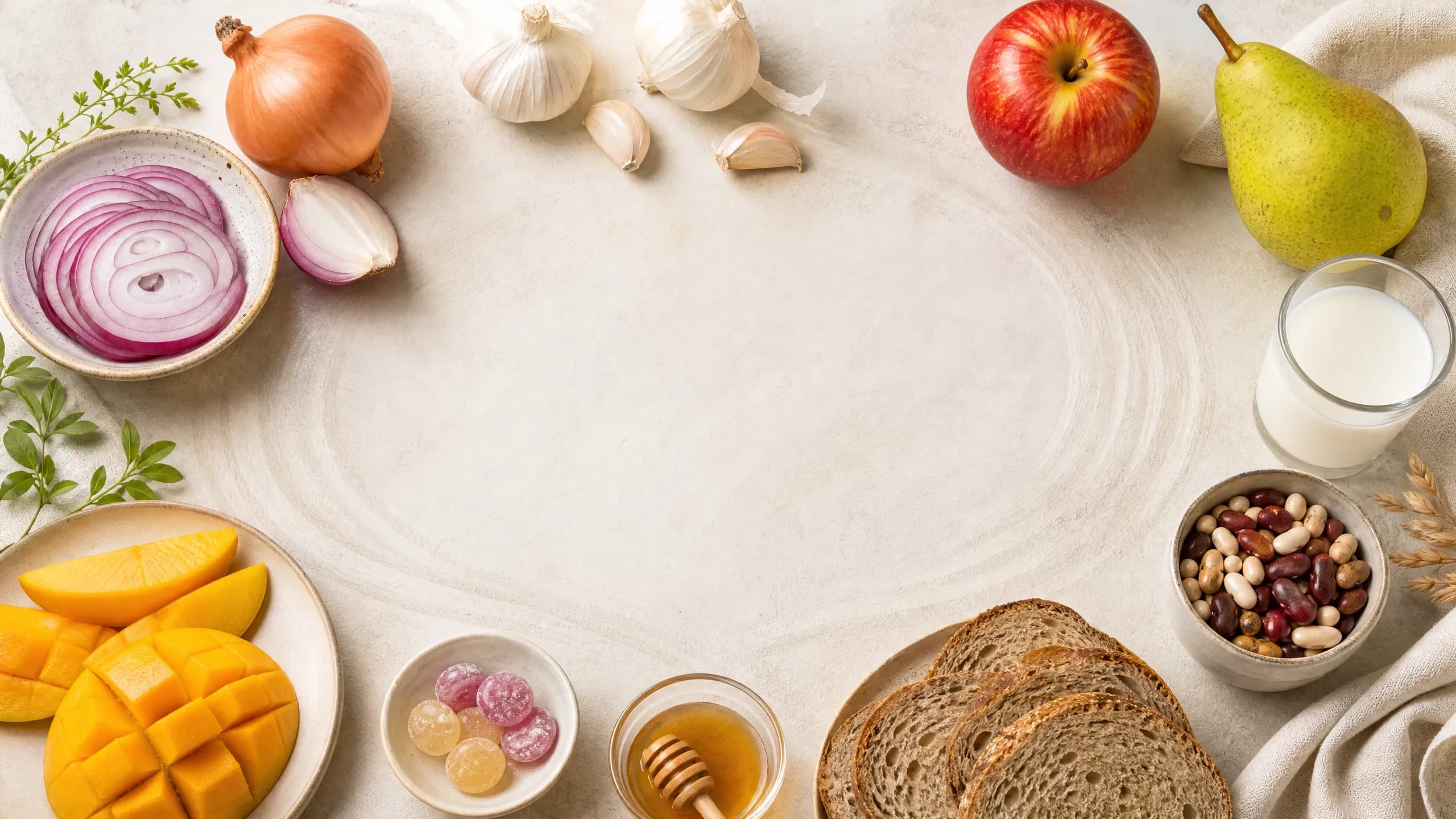
Garlic, onion, apples, pears, some mushrooms, wheat-based products, beans, large servings of avocado, honey, regular milk, and sweeteners ending in "-ol" can be higher in FODMAPs.
That does not mean every person with IBS must avoid them permanently. The purpose of a structured reintroduction is to learn which FODMAP groups and portions matter for you.
The three phases of a low FODMAP approach
- Short elimination: reduce high FODMAP foods for a limited period while maintaining balanced nutrition.
- Reintroduction: test FODMAP groups systematically.
- Personalization: bring tolerated foods and portions back into the long-term diet.
Working with a gastrointestinal dietitian can reduce unnecessary restriction and help protect nutrient intake.
A balanced IBS-friendly meal
Start with a tolerated protein, a starch, one or two vegetables, and a modest amount of fat. For example:
- Oats with lactose-free yogurt and blueberries
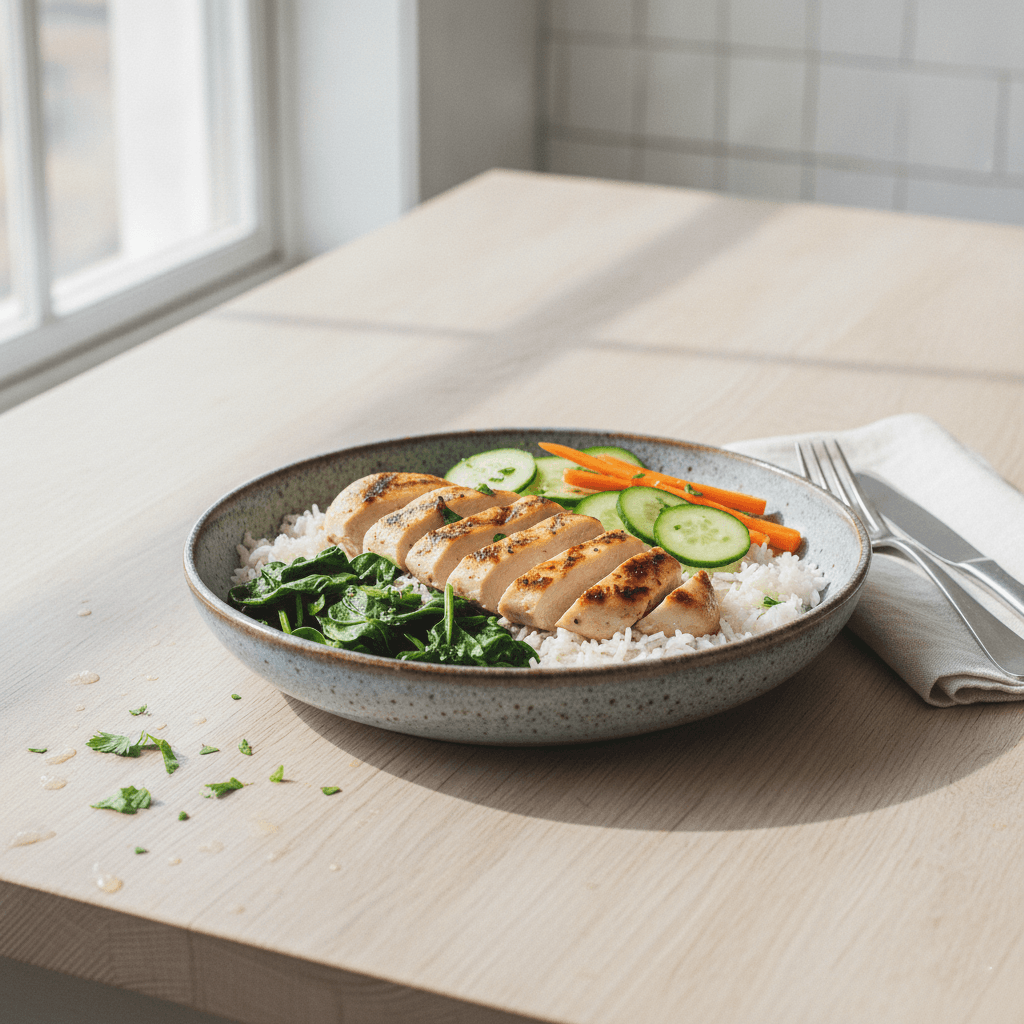
- Rice with salmon and cooked carrots
- Eggs with potatoes and spinach
- Quinoa with firm tofu, cucumber, and bell pepper
During a symptom spike, our IBS flare-up guide gives a simpler short-term plan. If fiber is a concern, read soluble vs insoluble fiber for IBS.
Track patterns without turning food into a test
Record the food, approximate portion, symptoms, bowel pattern, stress, and sleep for a limited period. Look for repeatable patterns instead of blaming the most recent meal. Symptoms can be delayed, and IBS can fluctuate even when food stays the same.
Frequently asked questions
Are eggs low FODMAP?
Plain eggs contain protein and fat rather than FODMAP carbohydrates. Added ingredients and individual tolerance can still affect symptoms.
Is white rice good for IBS?
Rice is low FODMAP and often easy to include, but no food treats IBS by itself. Pair it with protein and tolerated produce for a more balanced meal.
Can I stay low FODMAP forever?
A highly restrictive elimination phase is not intended as a permanent diet. Reintroduction and personalization help restore variety.
Do I need to avoid gluten?
Not everyone with IBS needs a gluten-free diet. Testing for celiac disease should happen before removing gluten when celiac disease is a concern.
Keep the plan practical
You do not need a perfect menu. Build a small set of tolerated meals, test one variable at a time, and widen variety when possible. For a portable reference, explore the +200 FOODS FOR IBS
About this article
Written by Digestimove Team. We combine lived experience with recognized digestive-health guidance and avoid presenting education as personalized treatment.
General references: NIDDK overview of IBS and the American College of Gastroenterology guideline.
Free IBS food list
Make your next meal easier to plan
Get the printable 50 low FODMAP foods list, or explore the full The Practical IBS and Low FODMAP Workbook when you want more detail.
Explore the complete The Practical IBS and Low FODMAP Workbook