IBS Flare-Up Guide: What to Eat and What to Do
A practical IBS flare-up plan with gentle food ideas, symptom-specific steps, hydration guidance, and red flags that need medical care.
Written by Digestimove Team4 min read
What is an IBS flare-up?
An IBS flare-up is a period when abdominal pain, bloating, gas, diarrhea, constipation, or urgency becomes more intense than usual. A flare can follow a food trigger, a large meal, poor sleep, stress, illness, a menstrual-cycle change, or no obvious cause at all.
The goal on a difficult day is not to "cleanse" your gut or remove every possible trigger. It is to reduce pressure on digestion, maintain hydration, and return to your usual pattern gradually.
First: match the plan to your symptoms
If diarrhea or urgency is the main problem
- Sip water regularly; an oral rehydration drink may be useful after repeated loose stools.
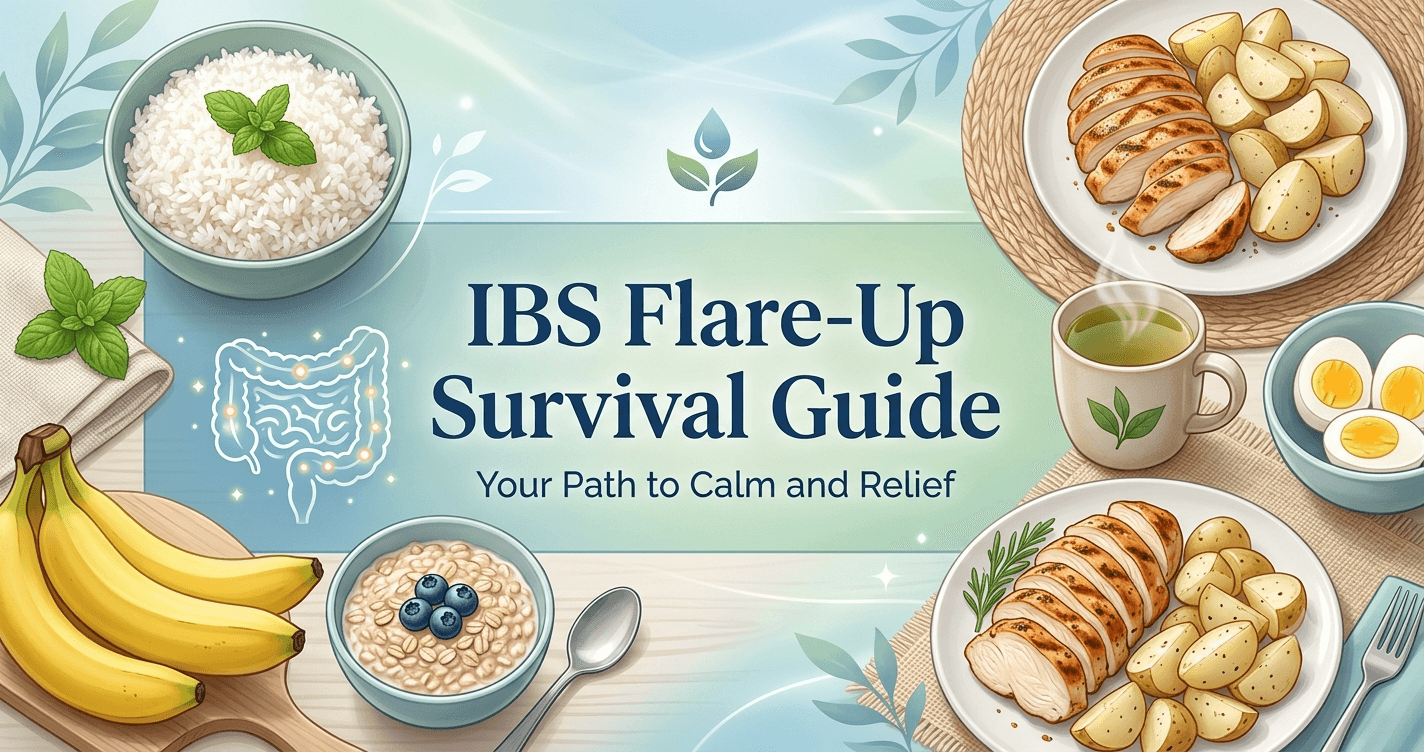
- Choose familiar, lower-fat foods such as rice, potatoes, oats, eggs, firm tofu, fish, or chicken.
- Temporarily reduce alcohol, large amounts of caffeine, very spicy meals, and sugar alcohols such as sorbitol.
- Do not assume every high-fiber food will help. Some rough, insoluble fiber can add urgency for certain people.
If constipation is the main problem
- Keep fluids steady rather than drinking a large amount at once.
- Gentle walking and a regular toilet routine may support bowel movement.
- Soluble fiber can help some people, but increasing it quickly may worsen gas. Read our IBS fiber guide before making a large change.
- Severe pain with vomiting, marked swelling, or inability to pass stool or gas needs urgent medical assessment.
If bloating and pain are the main problems
Smaller meals, slower eating, a warm drink, and gentle movement may be easier to tolerate than fasting. Our guide to IBS bloating explains why bloating can feel severe even when the amount of gas is not unusual.
Gentle foods to consider
There is no universal "safe food" list. Portions and personal tolerance matter, especially with FODMAP-containing foods. During a short flare, many people prefer simple combinations such as:
- Oats with lactose-free milk and a tolerated fruit
- Rice with eggs, firm tofu, fish, or plain poultry
- Potatoes with cooked carrots, zucchini, or green beans
- Lactose-free yogurt if dairy is tolerated
- Sourdough spelt bread in an appropriate portion
Use foods you already know you tolerate. A flare is usually not the best time to test several unfamiliar foods or supplements.
Common triggers worth pausing
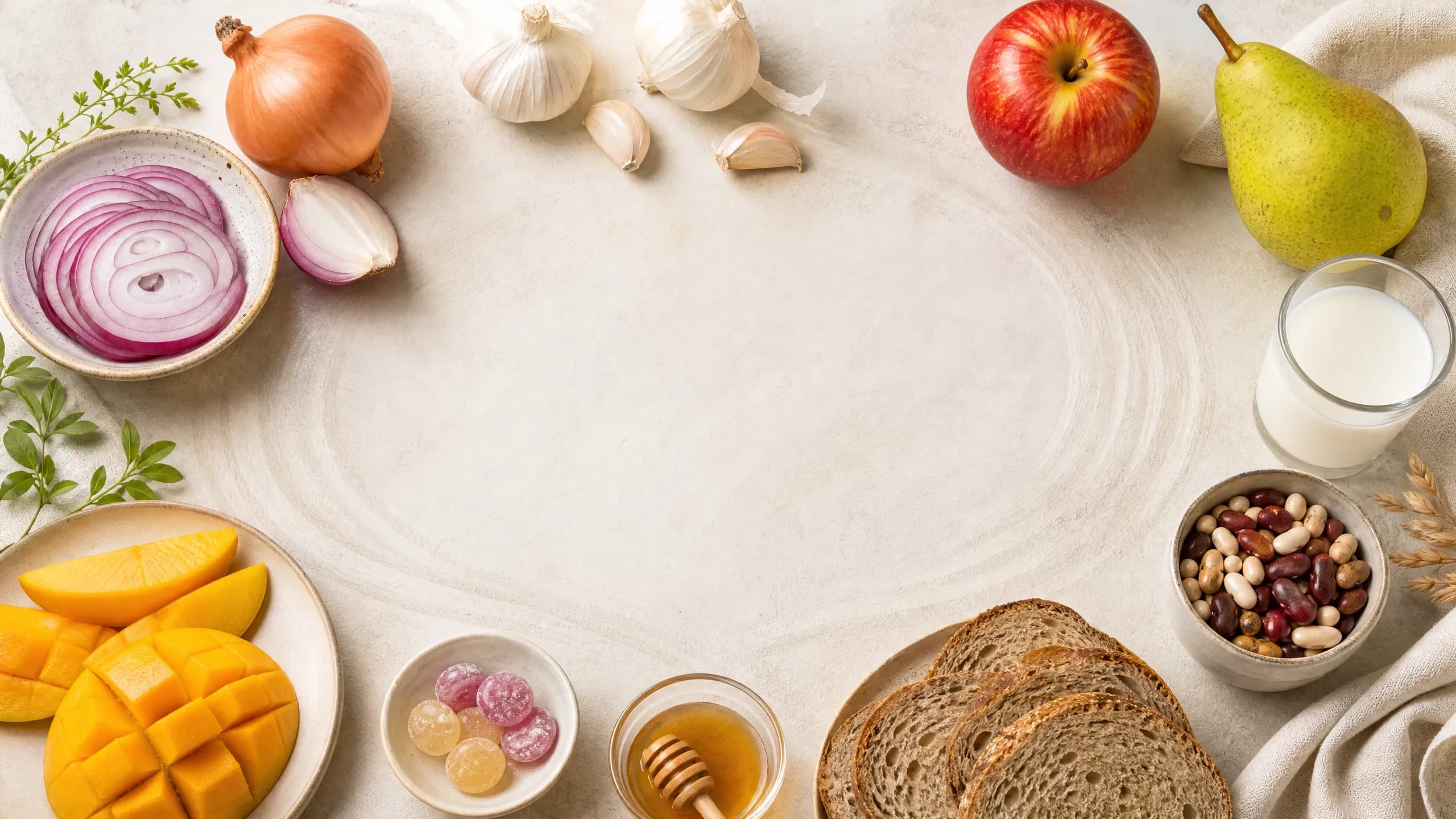
Large high-fat meals, alcohol, excess caffeine, carbonated drinks, garlic, onion, and products containing polyol sweeteners can worsen symptoms for some people. They do not need to be banned permanently. A short symptom log can help you separate a repeatable trigger from a one-off bad day.
For a broader food overview, see our low FODMAP food guide. A strict low FODMAP elimination phase should be temporary and ideally supported by a gastrointestinal dietitian.
A simple 24-hour flare plan
- Note your main symptom and anything unusual that preceded it.
- Choose smaller portions of familiar foods.
- Sip fluids throughout the day.
- Use gentle movement if it feels comfortable.
- Avoid adding multiple remedies at once.
- Return to a varied diet as the flare settles.
When a flare may not be IBS
IBS can be painful, but it does not explain every digestive symptom. Seek prompt medical advice for blood or black stool, fever, persistent vomiting, fainting, dehydration, unexplained weight loss, anemia, a new abdominal mass, symptoms that repeatedly wake you from sleep, or pain that is severe or different from your normal pattern.
Frequently asked questions
How long can an IBS flare-up last?
A flare may last hours or several days. Contact a clinician when symptoms are new, unusually severe, persistent, or different from your established IBS pattern.
Should I stop eating during an IBS flare-up?
Fasting is not routinely necessary and can make it harder to meet fluid and nutrition needs. Smaller portions of familiar foods are often a more practical starting point.
Is the low FODMAP diet a permanent IBS diet?
No. It is usually used as a short elimination phase followed by structured reintroduction and personalization. Long-term unnecessary restriction can reduce food variety.
Build a plan before the next flare
Keep a short list of tolerated meals, hydration options, your clinician's instructions, and warning signs. When you want a food reference for meal planning, explore the +200 Foods for IBS.
About this article
Written by Digestimove Team. We combine lived experience with recognized digestive-health guidance and avoid presenting education as personalized treatment.
General references: NIDDK overview of IBS and the American College of Gastroenterology guideline.
Free IBS food list
Make your next meal easier to plan
Get the printable 50 low FODMAP foods list, or explore the full The Practical IBS and Low FODMAP Workbook when you want more detail.
Explore the complete The Practical IBS and Low FODMAP Workbook