How to Increase Fiber With IBS Without Overdoing It
A step-by-step way to add fiber for IBS more gradually, with guidance on soluble fiber, fluids, symptom tracking, and when to pause.
Written by Digestimove Team3 min read
Start with the type of fiber
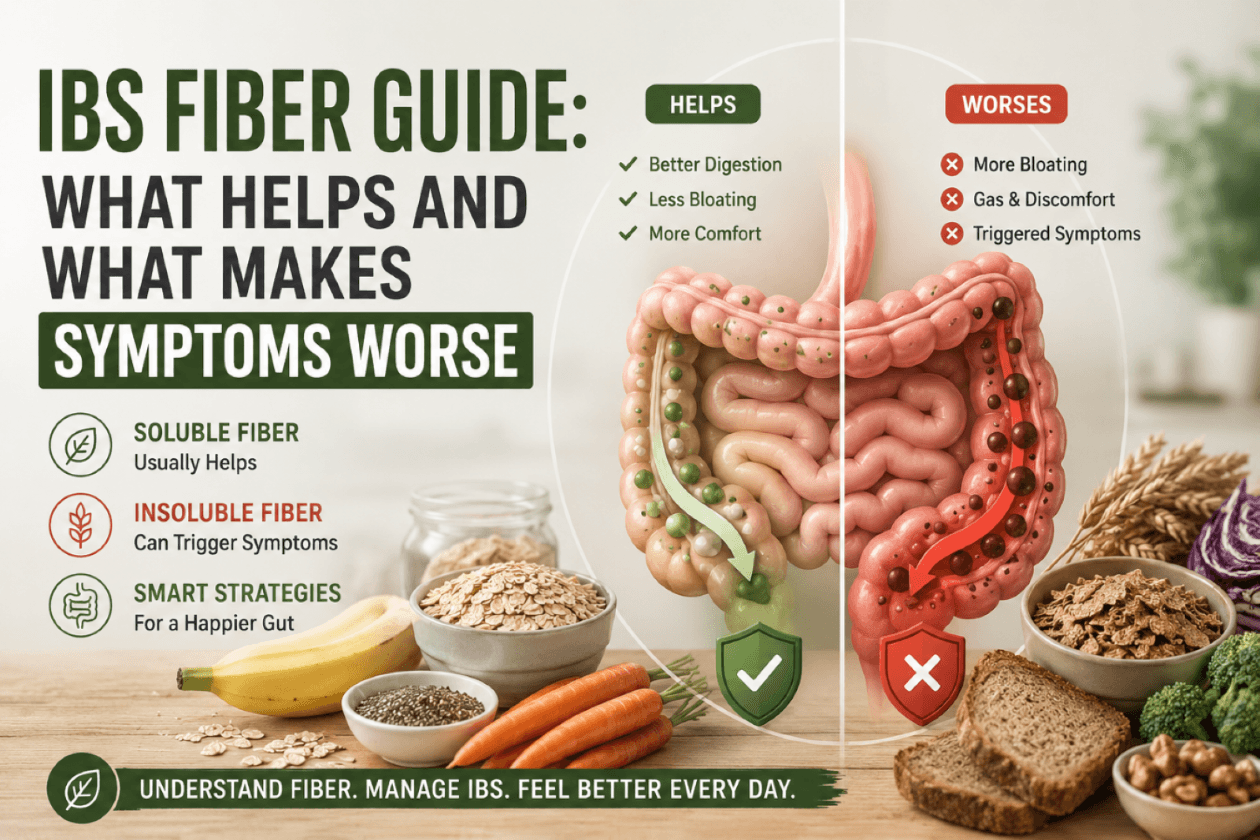
Soluble, gel-forming fiber is often better tolerated in IBS than coarse insoluble fiber such as wheat bran. Foods and supplements also differ in fermentability, so two products with the same fiber grams may feel very different.
For the full explanation, read soluble vs insoluble fiber for IBS.
Choose one starting point
Pick one familiar source rather than changing your entire diet. Examples include oats, kiwi, chia in a small portion, or psyllium.
Check supplement labels for inulin, chicory root, or sweeteners ending in "-ol." Those additions may trigger symptoms independently of the fiber itself.
Increase slowly
Keep the starting portion stable for several days. If stool pattern improves without a clear increase in pain, urgency, or bloating, make one small increase.
There is no prize for reaching a high number quickly. The goal is a dose and food pattern you can tolerate consistently.
Keep fluids steady
Fiber works with water. Sip fluids through the day rather than forcing a large amount at once. People with heart, kidney, or fluid-balance conditions should follow their clinician's guidance.
Track the response that matters
Record:
- Stool form and frequency
- Straining or urgency
- Bloating and pain
- The fiber source and portion
- Other changes, such as medication, stress, or menstrual cycle
Do not judge the plan from gas alone on the first day. Do reduce or pause the increase if symptoms are clearly worsening.
Adjust texture as well as amount
Cooking vegetables, peeling produce, blending oats, or choosing a softer grain can improve comfort for some people. Texture does not change every FODMAP level, but it can change how a meal feels.
Use our low FODMAP food guide when fermentable carbohydrates may also be part of the pattern.
Fiber for constipation, diarrhea, and mixed IBS
With constipation, soluble fiber may help soften stool and support regularity. With diarrhea, gel-forming fiber can sometimes improve stool consistency. Mixed IBS often benefits from a stable, modest approach instead of repeatedly raising and lowering the dose.
Fiber is not the answer to every bowel change. Persistent symptoms deserve assessment for medication effects, pelvic-floor issues, celiac disease, inflammatory bowel disease, and other conditions when clinically appropriate.
When to pause and get advice
Talk with a clinician if fiber causes persistent severe pain, vomiting, inability to pass stool or gas, or a major worsening of symptoms. Seek prompt care for blood or black stool, fever, anemia, or unexplained weight loss.
Frequently asked questions
Does more fiber always help constipation?
No. The type of constipation and fiber matter. Some people need a different treatment or assessment rather than a larger fiber dose.
Can I take psyllium every day?
Many people use psyllium regularly, but the dose, fluid needs, medication timing, and individual health conditions matter. Follow product and professional guidance.
What if fiber makes me more bloated?
Return to the last tolerated amount, check the source and added ingredients, and increase more slowly. Our IBS bloating guide covers other contributors.
About this article
Written by Digestimove Team. We combine lived experience with recognized digestive-health guidance and avoid presenting education as personalized treatment.
General references: NIDDK overview of IBS and the American College of Gastroenterology guideline.
Free IBS food list
Make your next meal easier to plan
Get the printable 50 low FODMAP foods list, or explore the full The Practical IBS and Low FODMAP Workbook when you want more detail.
Explore the complete The Practical IBS and Low FODMAP Workbook