New IBS Genetics Study (2026): Scientists Discover More Evidence That IBS Is Rooted in the Brain–Gut Connection
A major 2026 study involving 2.8 million people found new genetic links between IBS, the brain–gut connection, and lipid metabolism. Learn what this means for IBS sufferers.
Written by Digestimove Team4 min read
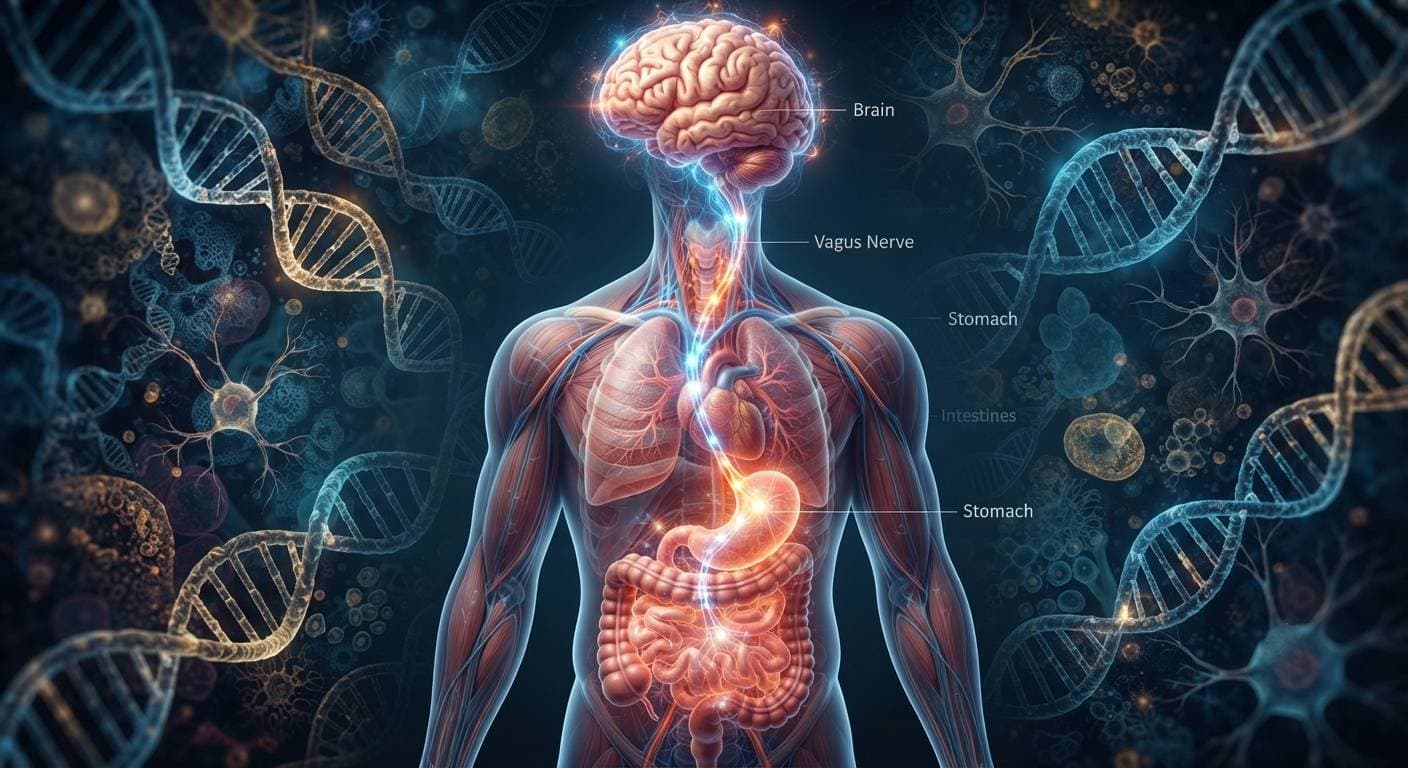
New IBS Genetics Study (2026): Your Brain and Gut May Be More Connected Than Ever
For years, millions of people living with Irritable Bowel Syndrome (IBS) have heard frustrating comments like:
"It's just stress."
or
"It's all in your head."
While stress can certainly influence IBS symptoms, modern research has consistently shown that IBS is far more complex than that.
Now, one of the largest genetic studies ever conducted on IBS has added another important piece to the puzzle.
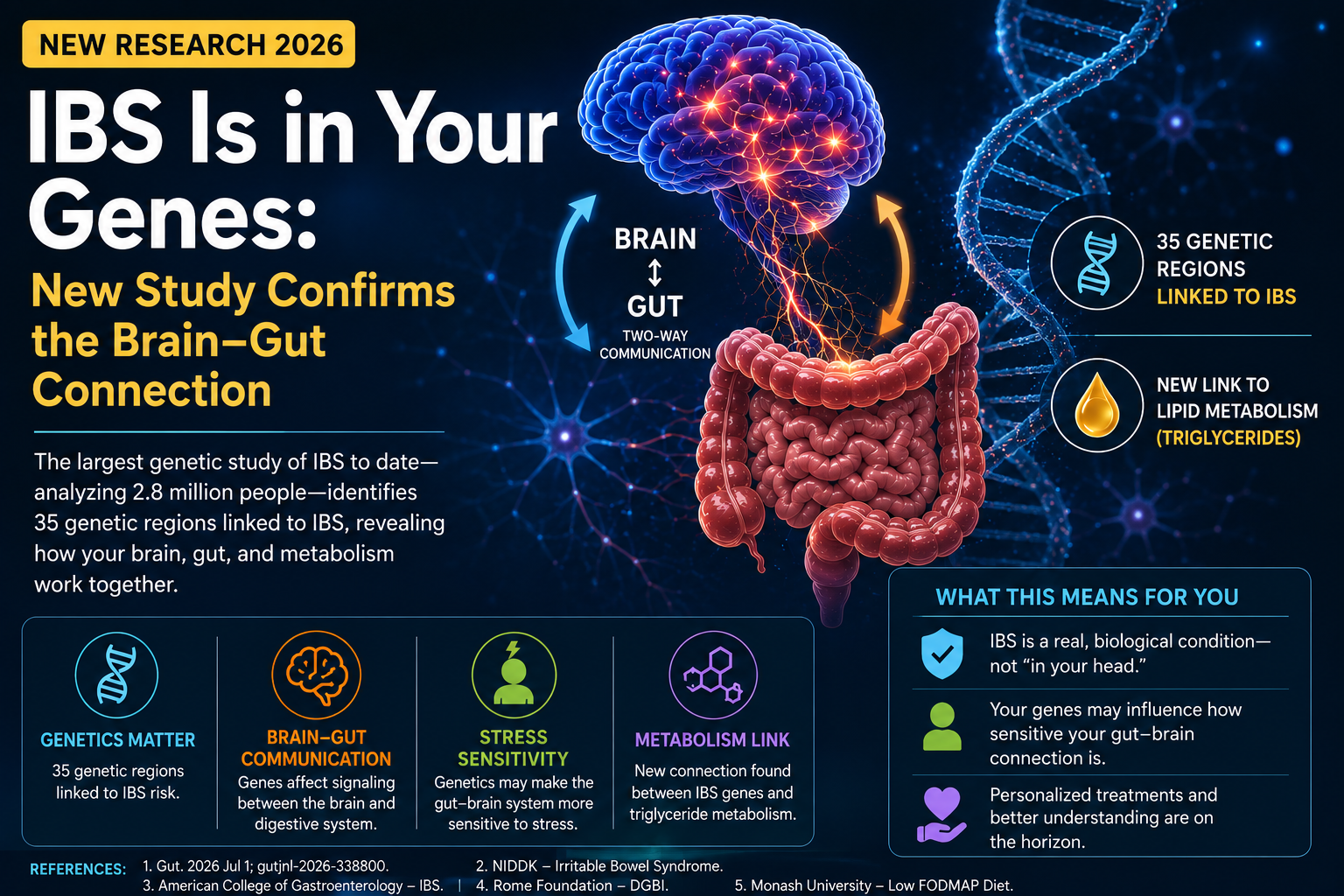
Researchers analyzed genetic data from nearly 2.8 million people and identified dozens of genetic regions linked to IBS, providing stronger evidence that IBS is a genuine biological disorder involving communication between the brain and the gut—not an imagined condition.
What Did Researchers Discover?
The international research team identified:
35 genetic regions associated with IBS Genes involved in nervous system signaling Genes affecting communication between the brain and digestive system A surprising connection between IBS and lipid (fat) metabolism
This makes it the largest genetic investigation of IBS to date.
IBS Is a Disorder of Gut–Brain Communication
Modern medicine now classifies IBS as a Disorder of Gut–Brain Interaction (DGBI).
That means your digestive tract and your brain constantly exchange information.
This communication helps regulate:
digestion pain perception bowel movements immune activity hormone release stress responses
When this communication becomes disrupted, IBS symptoms such as abdominal pain, bloating, diarrhea, constipation, or mixed bowel habits can develop—even when routine medical tests appear normal.
So Is IBS "All in Your Head"?
Absolutely not.
This study actually supports the opposite idea.
The research suggests that many people inherit genetic differences that may affect how their nervous system and digestive system communicate.
In other words:
Your brain influences your gut.
Your gut influences your brain.
And your genes may partly determine how sensitive that connection is.
That doesn't mean IBS is psychological.
It means IBS involves real biological pathways connecting the nervous system and the digestive tract.
Why Stress Still Matters?
One common misunderstanding is that proving a brain–gut connection means IBS is caused by anxiety.
That's not what researchers found.
Stress doesn't create the genetic differences.
Instead, stress can activate an already sensitive gut–brain system.
Think of genetics as the wiring.
Stress is one of the signals traveling through that wiring.
Some people simply have a more sensitive communication network than others.
The Biggest Surprise: Fat Metabolism
One of the most unexpected findings involved blood fats.
Researchers found genetic links between IBS and triglyceride metabolism, particularly involving genes that help regulate how the body processes fats.
Scientists don't yet know exactly why these systems are connected.
However, this discovery opens entirely new directions for future IBS research and may eventually lead to new treatment options beyond traditional symptom management.
What This Means for People With IBS?
This research doesn't provide a cure.
But it does strengthen something many IBS patients have known for years:
Your symptoms are real.
The study reinforces that IBS is influenced by genetics, nervous system signaling, metabolism, and gut biology—not simply stress or imagination.
Future treatments may become more personalized by considering an individual's genetic profile alongside diet, lifestyle, and other biological factors.
Our Take at DigestiMove
While genetics cannot currently be changed, many IBS triggers can still be managed.
Understanding which foods are more likely to trigger symptoms remains one of the most practical ways to reduce flare-ups.
That's why we created our +200 FOODS FOR IBS: High & Low FODMAP Guide, making it easier to identify foods that may be better tolerated and build meals with greater confidence.

Explore the +200 FOODS FOR IBS: High & Low FODMAP Guide
Frequently Asked Questions
Can IBS be inherited?
Research suggests genetics contribute to IBS risk, although no single "IBS gene" has been identified. Multiple genes appear to influence how the brain and gut communicate.
Does this study mean stress doesn't matter?
No. Stress can still worsen IBS symptoms, but this research suggests that genetics may influence how sensitive a person's gut–brain communication system is.
Can genetic testing diagnose IBS?
Not yet.
Current IBS diagnosis still relies on symptoms and medical evaluation. Researchers hope genetic discoveries will eventually improve diagnosis and treatment, but these findings are not yet used as a routine clinical test.
References
Gut – Cross-definition GWAS of IBS in 2.8 million individuals
Medical Xpress – Genetic study links IBS to lipid metabolism and triglycerides
NIDDK – Irritable Bowel Syndrome (IBS)
American College of Gastroenterology – IBS Patient Information
About this article
Written by Digestimove Team. We combine lived experience with recognized digestive-health guidance and avoid presenting education as personalized treatment.
General references: NIDDK overview of IBS and the American College of Gastroenterology guideline.
Free IBS food list
Make your next meal easier to plan
Get the printable 50 low FODMAP foods list, or explore the full The Practical IBS and Low FODMAP Workbook when you want more detail.
Explore the complete The Practical IBS and Low FODMAP Workbook